
The Embedded Writer: A New Model
of Creative Writing Programme for Delivery in Community Settings
Penny Simpson, PhD
Author | Fundraiser | Researcher | Creative Health Practitioner | FHEA
Abstract
This critical reflective paper discusses development of a health research methodology focused on creative writing in collaboration with Home-Start Essex, a charity supporting young families. It explores how a process of embedding a creative writer within an organisation over an extended period might progress a new model of practice built on a two-way exchange of skills and knowledge between practitioner and client group. A series of interconnecting creative writing workshops for Home-Start’s Thriving Communities project in South Essex was created and delivered with the aim of improving family mental health and wellbeing. These House of Dreams and Memories workshops were inspired by Gaston Bachelard’s work The Poetics of Space. Participants in the workshops were encouraged to build their own House of Dreams and Memories, an imaginary space of nurture and renewal inspired by Bachelard’s theory of poetics. The creative writing sessions were bookended by wellbeing sessions delivered by the Wellbeing Co-ordinator for Home-Start Essex. This joint delivery model offers opportunities to enhance outcomes for both creative practitioner and the commissioning body, and provides an example of best practice with a potential for scaling up. The article reflects on the challenges faced in setting up such a collaboration and concludes with a discussion of ways to progress the model as both a creative arts opportunity and evaluation tool.
Keywords: Bachelard, memory, creative writing, wellbeing
APA citation: Simpson, P. (2026). The embedded writer: A new model of creative writing programme for delivery in community settings. LIRIC Journal, 5(1), 27–45.
Introduction
Exploring the Approach Taken in Devising the Workshops
In June 2024, I attended an event, Public and Third Sector Speed Networking – Inequalities, organised by the Research Impact team at the University of Essex in the UK. An invitation to attend came from the Research Impact Officer for Health at the University of Essex where I am a Visiting Fellow in the Faculty of Arts and Humanities. The event was aimed at people working in the health and social care sector, and its purpose was to bring representatives from a range of public health and voluntary organisations into direct contact with academic researchers to initiate discussion and potentially launch new research projects. My reason for attending was primarily to widen my network of contacts and to develop these connections in a more engaged manner than is possible whilst working on short-term contracts in the creative health sector.
Arriving at the speed-networking event, I quickly realised I was the only creative–critical practitioner in the room; I am not a researcher with a background in the social sciences, and at first the project I had to discuss didn’t feel translatable to a room full of people working at the frontline of service delivery during a cost-of-living crisis. What I had to share was The House of Dreams and Memories, a creative writing programme I originally devised and delivered for a group of NHS (National Health Service) patients living with long-term health problems and chronic pain. The workshops formed part of a wider programme of activities organised by the Wellness Improvement Service (WISE) run by Cwm Taf Morgannwg–University Health Board (CTM–UHB). WISE focuses on a lifestyle medicine approach to improving mental and physical wellbeing (https://ctmuhb.nhs.wales/wise-ctm/our-service/). The workshops ran in 2023 and were recommissioned in 2024, both programmes receiving funding from the NHS and Arts Council of Wales.
Whilst my workshops for WISE garnered positive feedback from participants, there was no opportunity for me to expand on what was achieved as it was devised as a short-term project with a fixed budget. This is a problem facing many practitioners as evidenced in a 2025 report from the Creative Industries Council Health and Wellbeing Forum. The report states, ‘[I]n the main, the sector is characterised by very small organisations and individual practitioners funded through grants’ (Arts Council England, p. 10). The result is a lack of significant opportunities for an individual to grow a sustainable practice and deliver long-term impact unless working inside (or with) large cultural and commercial organisations. Like many other practitioners, I must take a creative approach to developing partnerships and funding opportunities. Attending the speed-networking event is an example of my approach.
I was impressed by the range of service providers in attendance at the event, but it did feel a little daunting entering the room. As the networking got under way, I realised any reservations I had were unnecessary. There was interest in the workshops from some organisations who felt it would benefit their clients, but the key question was how they might be funded. Another consideration from my perspective was how I might adapt the workshops to align with a new organisation’s objectives without losing sight of how I might progress my own creative research aims.
I left the event with three potential connections, and after follow-up meetings I chose to work with Home-Start Essex. A meeting was set up between me, Chris Jones, Area Lead Co-ordinator, South-Essex, and Lisa Pawlowski, Wellbeing Co-ordinator. Both felt my workshops had potential to support what their organisation is doing to improve mental health and wellbeing for families with young children. To ensure I was the ‘right fit’ for the wider organisation, Chris invited me to run a taster workshop for staff from across Essex to familiarise them with the content of the workshops and my way of facilitating sessions. It was also an opportunity for me to learn more about the kind of clients accessing Home-Start Essex’s services and to discuss some of the challenges that might come up during delivery.
I found that taster session invaluable for understanding how I might adapt The House of Dreams and Memories for Home-Start Essex. Of equal importance, it demonstrated to me how essential these early exchanges and conversations are to ensure my proposed creative health activity is tailored to suit the specific needs of a client group and yet remains flexible and dynamic in structure to allow for creativity and enjoyment. The taster session acted as more than an introduction or a means by which to sell an idea—it set the tone for an ongoing working relationship that enables me as a practitioner and creative health researcher to experiment and explore my creative process in collaboration with members of staff and groups of participants whose insights and feedback were crucial in helping this project evolve and succeed.
I was given opportunities to generate new material and adapt my approach when required through building on participants’ feedback gathered as each programme of workshops unfolded over a ten-month period. It was invaluable having mini debrief sessions after each workshop with the programme’s co-facilitator Lisa Pawlowski. I will explore this approach more fully later, but at this point I would like to underline the importance of a model of practice that sees the creative practitioner involved at the very outset of a commission, enabling a relationship of trust to emerge, which helps inform successful delivery. It helped generate the feeling I was at the beating heart of a project, fully conversant with how an organisation works with its clients within a wider social context.
Gaston Bachelard: ‘The Geography of Echoes’
My creative practice is rooted in experience and knowledge gained in my former roles as journalist and postdoctoral researcher. It is a process that has evolved over two decades, centred on the legacy of trauma, and it has informed the writing of three works of fiction, a series of academic research articles, and my current creative workshop practice. Whilst working as a journalist, I specialised in writing about the aftermath of violence in post-conflict settings. The transmission of trauma across generations is also the theme of the novel I wrote for my PhD in creative writing, which examined the exhumation of mass graves in post-Franco Spain. My PhD research spanned historical and legal texts, and some hybrid works that I felt were more responsive to the challenge of giving expression to complex legacies of trauma. And it was one of these hybrid books I turned to when I was awarded the commission by WISE: Gaston Bachelard’s The Poetics of Space.
Bachelard’s text became integral to the development of my creative writing workshops for WISE and Home-Start Essex. In his book, Bachelard examines images he associates with memories of his childhood home, expanding his discussion through reference to key symbolic spaces, including attics and cellars. The poetic evocation of these spaces through word and image inspired my approach to constructing a flexible template for use in my workshops.
The Poetics of Space, first published in 1958, is a book of philosophy, but it’s also a text that has been admired by many visual artists and writers including Turner Prize-winning artist Rachel Whiteread. Her acclaimed artwork House (1993) was created by taking a concrete cast of the interior of a three-story Victorian house in Bethnal Green, London. The temporary public sculpture fascinated visitors and critics alike for its evocative realisation of the nooks and crannies of a building scheduled for demolition (https://www.artangel.org.uk/project/house/). Bachelard writes about the sensory images that we associate with our memories of our childhood home—the feel of a worn door latch in the hand, a forgotten corner where you used to hide away, the small sensory details which were also captured in Whiteread’s House. What I find particularly compelling is Bachelard’s discussion of image and memory filtered through the architecture and spaces of a house. This can be seen in the contents page, where chapter headings include ‘The House. From Cellar to Garret’, ‘Drawers, Chests and Wardrobes’, and ‘Corners.’ Bachelard also analyses spaces in nature that are home to birds and sea creatures such as nests and shells. His idea of home is of a protean, shape-shifting space, rich in potential for growing our powers of imagination:
The space we love is unwilling to remain permanently enclosed. It deploys and appears to move elsewhere without difficulty; into other times, and on different planes of dream and memory. (Bachelard, 1958/2014, p. 74)
In other words, the house is a psychological diagram, read through the body, which does not forget the spaces of intimacy it has known. Bachelard again: ‘Inhabited space transcends geometrical space’ (p. 67). It is a ‘geography of echoes.’
The ‘Imaginative Assemblage’
Bachelard’s discussion of body and spatial memory informed how I wrote about post-traumatic stress and intergenerational trauma in my PhD novel. My three principal characters are exiles and narrator–witnesses who turn self-archivist, their bodies transformed into a form of portable archive. Each character is created through a close interlacing of emotional and body memory and history—personal, imagined, and factual. In writing my novel, I came to regard the exilic body as a force field, a site of compressed time, in which the detail reveals the whole. To reflect this in a work of fiction I applied the visual art technique of montage to my writing process. The overarching image is the exhumation of a mass grave in post-Franco Spain. Whilst the site is imagined, the story it tells is rooted in the work of forensic scientists, forensic anthropologists, journalists, and family members who have been campaigning since the start of the 21st century for the exhumation of the mass graves.
In devising a framework to tell an intergenerational story of great complexity, I saw a parallel between writing montage and the forensic practice of ‘imaginative assemblage’—the drawing together of biographical and verbal accounts of the past, ante-mortem data such as photographs and farewell letters written by victims before they were killed, along with objects—‘objects of return’—removed from the grave (Renshaw, 2011, p. 35). My fictional characters are also created through an intricate assembly of image and movement, material object, and photograph. Recurring images and objects of return, such an earth-crusted pocket watch found in the grave, create patterns of knowledge that accumulate throughout the novel, tracing legacies and defying the silence that has surrounded the existence of the mass graves.
Further, I weave into my novel key images found in Picasso’s anti-war painting Guernica to help deepen patterns of connection across three different lives. They include the ghostly flower seen at the bottom of the painting, the palm (and lifelines) of the fallen soldier, and the mother carrying her dead child. These pivotal images are scattered across the text and act like guides to the secret connections waiting to be uncovered. 1
My creative research practice is also shaped by Carolyn Steedman’s analysis of the archive. In her book Dust: The Archive and Cultural History, she argues the archive is no longer a keeper of ‘the original experience to which we may return’ (2001, p. 7). Instead, it is a place ‘where a whole world, a social order, may be imagined by the recurrence of a name in a register, through a scrap of paper, or some other little piece of flotsam’ (p. 81). The archive is not a physical institution or locatable on a map; it is something which is imagined, contained, and carried within and on the body, shaped by the senses, by the transitory, the ephemeral. In my novel, for example, the names of the missing and the dead are embroidered by master tailor Félix Conesa into his signature shirts made of ‘weeping’ silk. It is how they are transported back into the lives of the living, like invisible–visible memorials. When I received the WISE commission, I knew I wanted to create a project that would develop these critical concepts further and in a context in which participants’ imaginations could become an important element in the process of managing complex health conditions over an extended period. The overarching aim was to encourage participants to build their own House of Dreams and Memories—a form of self-archiving which drew on memory images, keepsakes, anecdote, and reflection. The idea was to travel through the house over the course of the workshops, from cellar to attic, from staircase to dusty corners, and to build spaces which would enable participants to move through time and space. They would build shapeshifting, chameleon spaces where the imagination could operate.
To introduce the idea of what we would be doing in the workshops, I shared with the groups a poem by British Caribbean poet Roger Robinson. In ‘A Portable Paradise’, Robinson recalls his grandmother’s advice for overcoming worries at times of stress or difficulty. The paradise in the poem evokes the images of the Caribbean island where Robinson was born, but it’s also conceived as a portable entity, an island wrapped in a handkerchief, concealed in a pocket. In other words, it’s an imagined, protean space which echoes Bachelard’s evocation of his childhood home (2019, p. 81).
The WISE commission also spoke to me on a personal level. My mother had emphysema, and I knew how curtailed her life had become through chronic illness. I remembered how isolated she had become towards the end of her life because her condition left her housebound, and how that isolation had let to a deterioration in her mental health. She had a profound sense of loss that was more than simply the loss of physical movement. Her chronic health problems constituted a trauma.
What interested me when I came to work with Home-Start Essex was that participants shared similar experiences to those who attended the WISE creative writing workshops—shared feelings of isolation, of being overwhelmed, of needing support and opportunities to build confidence and resilience. They experienced a range of challenges in their daily lives, and when they talked about themselves it was often in the context of their role as a parent or carer; in their discussions with schoolteachers, council officials, and other key workers seeking advice, guidance, support. A recurring theme was a sense of a loss of self and of occasions when they might speak about who they felt themselves to be outside their parenting role. A key aim of the guided journey through The House of Dreams and Memories was to return that sense of self and to give participants the confidence to talk about who they are, the agency to share that story in their own words, drawing on the diversity of their experiences and memories.
Development and Delivery of Workshops
Overview
As stated earlier, The House of Dreams and Memories was originally designed for delivery online as part of WISE, a social prescribing project run by the NHS in the South Wales Valleys. The Thriving Communities project for Home-Start Essex resulted in some changes to the programme format, primarily the introduction of a joint facilitation model created by me and Home-Start Essex’s Wellbeing Co-ordinator Lisa Pawlowski. Each programme ran for ten weeks and was made up of six creative writing sessions and four wellbeing sessions. In total, the Thriving Communities project delivered four programmes of workshops (including twenty-four creative writing sessions) to an estimated 30 parents and carers in Southend and Rochford between 2025 and 2026.
Ethics and Evaluation
The adoption of a joint facilitation model enabled me and Home-Start Essex to devise an ongoing process of evaluation for the Thriving Communities project and to ensure it met with the organisation’s ethical guidelines. There were four components to the evaluation process:
- Debrief sessions of 20–30 minutes between co-facilitators Lisa Pawlowski and myself after each workshop to identify what was working and what might be expanded upon, and to hear in confidence any relevant information from Family Support Co-ordinators (FSCs) relating to issues affecting participants’ attendance or engagement.
- I kept a workshop journal and made notes after each session to help me reflect on how I might adapt the template to better reflect each group’s needs. I also noted where I changed exercises or improvised new tasks to guide me in developing future workshop programmes.
- At the end of each of the four programmes, participants were contacted by telephone by their designated FSC for feedback. The co-ordinator obtained permission from participants to use their feedback anonymously in reports and other external evaluation exercises, including this article. Lisa Pawlowski then shared participants’ feedback with me.
- I conducted an interview via email with Lisa Pawlowski and Chris Jones at the end of the project. They were asked about the value of adding a structured creative writing activity to a wellbeing programme, specifically through the adoption of the joint-facilitator model. They were also asked how feedback from participants might help shape future strategy relating to the use of creative writing in new activities.
Workshop Delivery
The opportunity to anchor the creative writing workshops within a wider wellbeing programme brought a new dimension to The House of Dreams and Memories. Before coming to the first creative writing session, participants could meet with each other and build up confidence by taking part in three wellbeing sessions exploring themes such as resilience and self-care. I joined the group in the third session and participated alongside the parents in the discussions led by Lisa. My workshops started in the fourth week of the programme, and Lisa attended and took part. In an interview with Lisa conducted as part of my evaluation process, she explained
By providing some wellbeing sessions with the wellbeing support specialist first, parents and carers have the opportunity to meet, share some of their experiences, and learn some valuable wellbeing techniques. Having created this solid foundation, the group finds it easier to trust, and to share their writing with each other.2
The joint facilitation model also enabled a rapport to build between the co-facilitators, aiding workshop delivery and encouraging open discussion of possible tweaks and improvements as the programme unfolded. Before each workshop, I met with Lisa to hear of any issues that might have arisen over the week. Many of the parents attending the programme had complicated lives, and attendance could vary. It was useful to have knowledge where appropriate of any potential problems affecting participants’ engagement. We also held a debrief after each workshop to pick up anything of concern. For example, some participants preferred to stay off camera or to contribute to discussions via the chat on Teams. In an early debrief meeting, Lisa and I discussed ways to help participants see the value of turning on their cameras. I introduced some activities in which participants were requested to bring along certain items to sessions, for example, an item of special clothing for the Wardrobes session. These activities did result in participants turning on their cameras to show their personal items, and in some cases parents and carers who had been reluctant to speak were happy to tell the story behind their possessions, and it was possible to see the confidence that brought.
The reason behind some participants’ decision to turn off their camera was often just a question of space: some parents were parked up in their cars waiting to go into school or to work; others were occupied in feeding a little one, or they were poorly and joined us from their bed. What impresses me is the commitment they demonstrated in showing up when they could. It was evident they bonded as a group and enjoyed the opportunity to engage with other parents and carers in a similar situation. Their lives were busy and the concerns they spoke of linked to events at home; in the workshops, they made space for themselves, exploring memories of holidays, special gifts, and treasured emotions and encounters that they could include in their House of Dreams and Memories.
The final session in the programme was led by Lisa, a kind of ‘wrap’ session that provided an opportunity to encourage ongoing peer support. As Lisa explained in our interview, ‘This is a very important part of the programme to ensure parents have made connections, built new relationships and will continue their wellbeing journey.’
Selection of Participants
The participants were all parents and carers who had been referred to Home-Start Essex. They chose to attend a wellbeing programme after a series of assessments and discussions with specialist staff, including their FSC. The co-ordinator explained the different kinds of support on offer to all newcomers such as home visiting, wellbeing sessions, or a behaviour support programme. If a parent or carer agrees to wellbeing support, an internal referral is also made to Lisa as the wellbeing support specialist, who then makes contact to discuss the content and structure of the group in more detail.
Whilst standalone creative writing and creative journalling sessions have been provided in some face-to-face support programmes in the past, this was the first time Home-Start Essex had delivered an interconnected series of online creative and wellbeing workshops. As Lisa explained in our interview,
As an organisation Home-Start Essex is keen to help the families we support experience new things and build on their existing skills to help support self-esteem and confidence. This project has enabled us to trial new ways of working, which we can review and build on.
Choice of Environment
The choice of facilitating the online programme via Teams was partly to ensure greater reach for the programme. Many of the participants were isolated geographically as well as socially, so an online programme helped reduce stress over issues such as travel and childcare. A key aim of the workshops was to build self-esteem and confidence; making it easy to attend each session helped parents settle in quickly and make full use of the one-hour sessions.
The online environment allowed participants to come in and out of sessions without disrupting a speaker, which was helpful as many did have to deal with official telephone calls or home visits during sessions. The flexible format also meant attendees could pick up quickly on what they might have missed, slipping back into the writing without too much disruption for themselves or others. The chat function on Teams was also useful to clarify tasks set or to encourage participants to include their thoughts or notes on a topic if they weren’t free to speak on camera.
The Structure of Individual Workshops
The creative writing workshops were themed around four different spaces and two key objects: Thresholds, Cellars, Attics, Stairways, and Wardrobes and Boxes. The choice of themes reflected Bachelard’s chapter headings in The Poetics of Space as discussed earlier. The Home-Start Essex workshops were shorter than those delivered to WISE, primarily to accommodate the needs of parents and carers, some of whom attended with their babies and toddlers. Before each programme began, participants were sent a notebook and pen. The workshops were self-contained, but participants were encouraged to attend as many sessions as they could to get the full benefit of the programme. They featured a mix of short writing exercises focused on a set theme. Some of my prompts encouraged list-making and wish-making, as well as listicles and opportunities for creative doodling. Participants were asked to share their work either by reading out what they had written or by describing what had inspired them in a particular exercise.
The purpose of the first four workshops was to guide participants to build a scaffolding for their ‘houses’—from cellar to attic. I compared the house they were building to a tree, starting in the roots (the cellar), ascending through the trunk (the stairs), and arriving at the branches (the attic). This was an important image to open with and helped guide the journey through the imagined house. For example, the cellar of the house became a place of anchorage, not somewhere sinister as in many horror movies. We discussed what being rooted means and what might make you feel rooted in a place. The exercises encouraged participants to imagine their house as a shape-shifting space, a fusion of remembered places from childhood and things that inspired them in their current surroundings. Examples of responses that featured in the feedback from participants included the reimagining of a cellar as a flourishing orchard; another imagined their cellar as a giant memory box filled with toys that they remembered their parent favouring when playing with their grandchildren.
The purpose of each session was to move away from the literal to imagine new possibilities. With the imagination let loose, progress was made. For example, participants were asked to transform their staircases into a portal or time-travelling machine; they imagined where they needed to be and how their stairs would transport them there. For some, the stairways were not a tangible entity but represented a feeling of being stuck, of being held back. As they described that feeling, they began to challenge it by coming up with new details of their stairs, encouraged by prompt words I suggested such as ‘dolphin’ or ‘water.’ One participant described the dolphin bannisters that would support them if they felt they were about to fall; another said the sound of water they could hear standing on the bottom stair would remind them of the spa they imagined waiting for them up ahead.
The final exercise in each workshop focused on the ‘Word of the Week.’ This new feature for the Home-Start Essex workshops was a device I used to weave in some of the themes from the wellbeing sessions. For example, words such as ‘nurture,’ ‘hope,’ and ‘progress’ were used as prompts for participants to set goals for themselves or think up small acts of self-care inspired by the experiences and things they had written and talked about during the session. In the first week, the word selected was ‘hope.’ I asked participants to write a wish for themselves in their notebooks. I then divided the group into pairs, so each person had an opportunity to make a wish for another in the group. I found this was a simple but effective technique to encourage a group of comparative strangers to engage.
As the workshops progressed, the writing produced began to intuitively reflect what Gaston Bachelard achieves in The Poetics of Space. Writing the memory image became a work of ‘excavation’. For many of the parents and carers taking part, a common concern was a feeling they were not doing enough for their families. They were multitasking to an extraordinary extent but sometimes lost sight of that fact because of the complexity their lives. The workshops were not therapy; the idea of their acting as a kind of excavation was about giving participants the space to let their imaginations go and to focus on their own needs and feelings. It was interesting to see how many of the spaces they created were for them alone. While that inspired feelings of guilt, it also encouraged them to acknowledge why they did need a place of sanctuary—for reflection, for chilling, for just being. They imagined coffee machines, snacks, flowing rivers, butterflies, books, reading chairs, lava lamps, and an array of luxurious soft furnishings.
For the final two workshops focused on Boxes and Wardrobes, I invited participants to bring with them a small box, an object, and an item of clothing that held personal memories for them. The items became our guide through the session. They also came to resemble the imaginative assemblages made of personal possessions discussed earlier. For example, in the Boxes workshop, participants were asked to fill the receptable they brought with their favourite songs, films, or box sets, along with one luxury item, so creating a mini-archive redolent of Steedman’s analysis of the archive in her work Dust. We began with lists of titles, and then participants told the story behind their choices. There were many hardships in these participants’ lives, and it was empowering to hear them speak about their choices and that they felt safe to share their stories. It was cathartic but essentially, it was an opportunity for participants to tell their story in their own way, drawing on memories, emotions, dreams, hopes, and sometimes precious items; an opportunity that was not always available to them when engaging with challenges inside and out of the home.
In devising the workshops, I was mindful of the fact that not all have good memories of childhood or the home where they grew up. To that end, I framed all activities so that they could incorporate someone’s personal memories if they wished, or they could be completely made up, maybe a mashup of favourite places lived in or memories of cherished objects from different phases of a life or relationship. The choice was entirely the participants’, and exercises were introduced in a sensitive manner to ensure no one felt exposed or excluded. This approach was reinforced by discussion with Lisa in the debriefs that followed each workshop. If a participant seemed to be struggling or there were concerns, Lisa would ensure that individual spoke to their FSC. No one has been triggered by any of the activities in the workshops. What I observed was that any absence or a reluctance to talk in a session was linked to personal issues that lay outside the remit of the workshop for discussion, hence the value of having Lisa in attendance to direct that participant to appropriate forms of support offered by Home-Start.
Workshop Evaluation and Reflection
In developing The House of Dreams and Memories workshops, I felt it was important to choose an overarching theme that would enable all to contribute—whatever their previous writing experience—and which would simultaneously accommodate discussion and writing about complex emotional experiences including loss, grief, relationship breakdown, ill-health, and homelessness.
The House of Dreams and Memories workshop programme brings together memories of the past and present as well as hopes and dreams for the future; the purpose is to demonstrate how these dreams, memories, and hopes can be released through the imagination and shared. The joint facilitation model allowed for a continuous feedback process between me and Lisa. Our shared expertise enriched our approach to any challenges that arose. For example, some participants compared their writing or creative ideas negatively with those of others in the group; some had not used Teams before in addition to not knowing anyone when they first arrived in the workshops. Building trust in the group was important, and we led by example. I participated in Lisa’s workshop before beginning the creative writing sessions to break down any barriers people might feel with a change in lead facilitator; likewise, Lisa attended my sessions. That set an example of rapport and trust which fed into the group. Following feedback from Lisa I devised a follow-up activity, ‘A room of your own … to imagine, write and dream’, consisting of six new writing exercises.
Lisa also saw value in the joint model. In the interview I conducted with her as part of the evaluation process, she explained,
It’s been enjoyable for me personally and I have gained deeper insights into me as a practitioner and as an individual. Whilst we do offer journalling, it has inspired me to include more creative elements to the sessions I run to enable parents to explore their imaginations at a deeper level and to help support their mental health and wellbeing.
Another important factor was the comparative longevity of the project (ten months) which meant a bigger picture of activities and impacts could be attained through observation in the workshops, the debriefs, and in feedback gathered from participants in one-to-one conversations held with their designated co-ordinator after the programme of workshops was completed. By these means, feedback and evaluation become a more immersive process, centred on a three-way exchange between me, Home-Start Essex staff members, and the participants themselves. A key objective for the Thriving Communities programme was to improve mental health and resilience. Feedback from participants gathered by FSCs following the workshop programme demonstrate the impact achieved in moving towards this goal.3 One participant stated the workshops had helped her ‘regain’ her imagination:
I wasn’t sure what to expect. It’s really surprised me and made me think a lot more about myself, how to prioritise myself and regain my imagination. It’s been a massive help to me and helped me on my journey to heal and love myself again.
For other participants the idea of experiencing ‘me’ time in new ways was of importance. One participant explained: ‘Learning another way of having “me” time, thinking imaginatively has helped and it’s something I had never tried before or thought I would enjoy.’ For a third participant, the workshops helped improve her mental health: ‘I’ve really enjoyed [the workshops], and I looked forward to each session. It’s really encouraged more creative writing for me, which has helped me gain more mental control.’ Another participant commented on the structure of the workshops and how it facilitated the way they processed complex feelings in the sessions. They felt the format ‘made it easy to talk about difficult periods in [their] life without feeling brought down by them.’
What has really impacted on me is the way in which the wider team at Home-Start Essex have embraced the creative writing workshops and, in many ways, have shared ownership. On occasions, Lisa was unable to co-facilitate owing to other work commitments, and Chris Jones her line manager stepped in. For Chris, it was not just a practical issue, but a means by which she could assess for herself the workshops’ value by actively taking part. In an interview I conducted with Chris following the programmes’ completion, she stated:
We were unsure at the start as to how families would respond to the creative writing elements, but the response has been so positive. I think the approach to the creative writing, with everyone being encouraged to share and their contributions being accepted and valued, has helped reinforce one of our core values of offering non-judgemental support; and has helped parents/carers feel seen and heard, which we know is a key step in building self-esteem and self-confidence.
Other staff members asked to come to individual sessions to experience what was going on, including the fundraising manager and several of the FSCs. Through attending the sessions, the co-ordinators were able to talk to participants about what to expect if they signed up for the creative and wellbeing programme. These requests made me realise how important it is for this feeling of ownership to be established within the wider organisation; it’s not only pragmatic but also gives staff members an opportunity to find some creative space in their busy working schedules. The priority of the project was to secure key outputs, of course, but I also valued the way it delivered outcomes for learning and interaction between myself as a researcher–practitioner and an organisation with a strong commitment to supporting families and children. Good practice emerged through intentional design, but also through a process of adaptation and openness as a project unfolded. This is a key takeaway for me personally from my collaboration with Home-Start Essex.
Future Plans and Conclusion
The House of Dreams and Memories workshops developed in close collaboration with Home-Start Essex provide a potential model of practice for adoption within the wider creative health sector. As discussed in the Introduction section, the challenge facing many creative health practitioners is lack of opportunity to develop their professional expertise through sustained engagement with health service providers. The Creative Industries Council Health & Wellbeing Forum report calls for opportunities for creative practitioners to help find ‘new solutions to persistent problems for our health service’ (Arts Council England, p. 4). Further, it argues for a more joined-up approach to be established amongst industry, government, and other partners in universities and across the health sector, with emphasis on identifying successful programmes that might be scaled up.
The House of Dreams and Memories and its new iteration within a wellbeing programme aimed at improving mental health is arguably one such programme. The starting point was the in-person event hosted by the University of Essex bringing third sector and voluntary organisations—part of the wider health sector—into a room to meet and discuss potential collaborations with academic researchers. I met Chris Jones from Home-Start Essex and began a conversation which led to the commissioning of my creative writing workshops as part of the Thriving Communities project. It was helpful to have been involved in project from its inception, with the workshops forming part of the bid to the funding body. By that point, the organisation had met me and was familiar with what I could offer. The joint facilitation model enabled me to expand my workshops in close collaboration with wellbeing specialists working with families with young children.
This was new territory for me to explore and a further opportunity to evaluate the suitability of my workshops for the wider creative health sector. It is a model that builds from the ground up, a model of good practice. I felt embedded in the wider organisation and established a close affinity with the key personnel involved with delivering Thriving Communities. The joint facilitation model was also helpful for Home-Start Essex in their ambition to introduce new support activities into their programme and to ensure that new activity met key needs as well as funders’ objectives. Ongoing dialogue, weekly debrief sessions during the running of each programme, informal feedback from participants in the workshops, as well as data gathered by FSCs and my interview with key staff members resulted in rich qualitative evidence. Another outcome for me was to realise the potential of this embedded approach to access new sources of funding and professional development support, which are not often open to me working as an individual creative practitioner.
What has developed from that initial networking event has gone beyond my expectations. Home-Start Essex has invited me to be part of future funding bids to expand the Thriving Communities project into new regions. The expansion of the project would provide an opportunity to evaluate progress over a longer period and assess still further the impact of creative writing to improve family mental health and wellbeing. It will also be an opportunity to develop further the model of embedded writer, offering a potential new pathway for other creatives working outside large-scale institutions to make their impact in the development of effective creative health programmes.
Acknowledgements
A big thank you to all at Home-Start Essex and the Thriving Communities project team: Chris Jones, Lisa Pawlowski, Hilary Fry, and Michelle Boakes, and to all the workshop participants who contributed to making the project a success. And diolch o galon to the participants who took part in The House of Dreams and Memories workshops for WISE in 2023 and 2024, and to the staff at Cwm Taf Morgannwg Health Board, NHS Cymru/Wales, who made it happen, chiefly Olivia Tutton-Thompson, Wellness Education Co-ordinator, and Esyllt George, former Arts and Health Co-ordinator.
Notes
1 Further discussion of my process of writing montage can be found in my article ‘Writing the Image: An Analysis of the Labyrinth-Grave as “Denkbilder” and Framework for Re-imagining a Narrative About the Aftermath of Violence’ (Simpson, 2018). I also explore the concept of the montage novel in ‘“Breaking the frame”: The Role of Artmaking in Narratives of Migration and Diaspora’ (2022).
2 The interview took place on October 2025 between me, Lisa Pawlowski, and Chris Jones. Further quotations from Lisa and Chris in this article come from that interview.
3 Home-Start Essex obtained permission from participants to use their feedback anonymously in reports and other external evaluation exercises including this article.
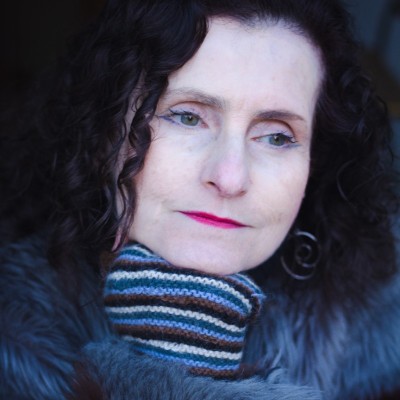
Dr Penny Simpson is an author, researcher, and creative facilitator with writing and creative research projects commissioned and funded by a range of organisations, including the BBC, British Council, NHS, and Arts Council of Wales. Currently, she is delivering her innovative creative writing workshop programme The House of Dreams and Memories to organisations and charities in the health and wellbeing sector. She has received funding from the University of Essex for a new Writing with Images project in 2026.
https://www.linkedin.com/in/penny-simpson-70664296/
References
Arts Council England. (2025). Creative Industries Council Health and Wellbeing Forum. https://cdn.prod.website-files.com/60a2e06021577f542777ca5d/68cc1937930b4e6d475509e8_CIC-HealthWellbeingReport-v5FINAL.pdf
Bachelard, G. (2014). The poetics of space. Penguin Classics. (Original work published 1958)
Robinson, R. (2019). A portable paradise. Peepal Tree Press.
Renshaw, L. (2011). Exhuming loss: Memory, materiality and mass graves of the Spanish Civil War. Routledge.
Simpson, P. (2018). Writing the image: An analysis of the labyrinth-grave as ‘denkbilder’ and framework for re-imagining a narrative about the aftermath of violence. Writing in Practice, 4. https://www.nawe.co.uk/DB/wip-editions/articles/writing-the-image-an-analysis-of-the-labyrinth-grave-as-denkbilder-and-framework-for-re-imagining-a-narrative-about-the-aftermath-of-violence.html
Simpson, P. (2022). ‘Breaking the frame:’ The role of artmaking in narratives of migration and diaspora. Lit: Literature Interpretation Theory, 33(3), 212–227. https://doi.org/10.1080/10436928.2022.2100667
Steedman. C. (2001). Dust: The archive and cultural history. Manchester University Press.
Volume 5, No. 1 | March 2026