
Subtle and Significant Shifts—The Transformational Effects of Therapeutic Writing
Elisabeth Winkler, MSc
Metanoia Institute
Abstract
This paper looks at the transformational effects of therapeutic creative writing by re-examining aspects of previous research titled The Great Unreality – An Autoethnographic Exploration of Depersonalisation in Adolescent Journals Using Therapeutic Writing. The original research identified both a past psychiatric disorder of depersonalisation–derealisation and a lifelong recovery process. Therapeutic insights brought about significant shifts of perspective using creative writing coupled with compassion and underpinned with psychological understanding informed by the MSc course Creative Writing for Therapeutic Purposes. This paper revisits some of these key moments of the research. Whilst acknowledging the risks of self-research, I suggest therapeutic writing may enhance self-discovery and self-compassion, generating a fresh narrative for a troubled past.
Keywords: autoethnography, therapeutic writing, depersonalisation, derealisation, narrative therapy, Internal Family Systems, creative writing, self-discovery
APA citation: Winkler, E. (2026). Subtle and significant shifts—The transformational effects of therapeutic writing. LIRIC Journal, 5(1), 46–70.
Introduction
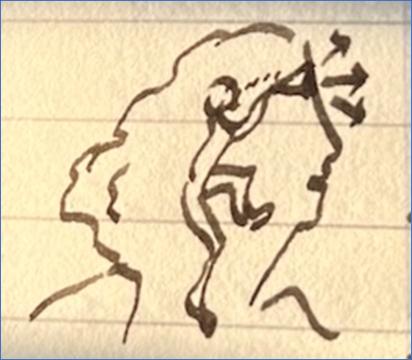
This feeling … of this person INSIDE me peering out of a window and seeing everything but of course not the window … This person inside me is me but my body has just become an accessory to what is happening behind it.
T]he Great Unreality … has been a chronic, integral, interfering part of my life for the last 6 months or so. It has now come to a point where it (it. Well, ‘it’ being part of my brain) has become v. persistent. Today’s feelings: I feel as if I have been blind all my life (I know I haven’t) and I have been gifted with the gift of sight. I do not see everything more clearly – I am just more conscious that I see. But the thing is, all I see is the outside of me. I am only looking at it, out of my brain. And all that I see passes like a film in front of my eyes, looking therefore somewhat unreal and distant (Personal journal, 1971).
In my adolescence I was possessed by what I called the Great Unreality—great because of its pervasiveness, a fog descending, making the world look flat and meaningless, and myself feel false and distant. I have denigrated this past-me, which led to dropping out of higher education and career. Thanks to autoethnographic research exploring my journals from adolescence with therapeutic writing (drawing in Figure 1 with journal excerpts above), I turned a story of failure into a positive one of mental health recovery. My research identified the Great Unreality as depersonalisation–derealisation (NHS, 2023), a trauma-related dissociative disorder which is prevalent, under-researched, and often misdiagnosed (Michal et al., 2013; Murphy, 2023). I made a retrospective self-diagnosis according to the self-rating questionnaire, the Cambridge Depersonalization Scale (Sierra & Berrios, 1996). Self-diagnosis is common. ‘Most sufferers end up discovering the condition themselves … and “pitching” it to the experts’ (Perkins, 2021), while unpublished research found 52% of respondents with self-identified symptoms of depersonalisation–derealisation did not have a clinical diagnosis (Foglia, 2023). A psychiatric disorder validated the extreme nature of my experience. Thanks to therapeutic writing, I made meaningful interpretations leading to increased self-compassion (Winkler, 2024). This paper examines how writing to artefacts—a photograph of myself and a journal entry (aged 16)—brought about shifts of perspective.
Autoethnography as a research method was in itself transformative. I zoomed ‘from the personal to the cultural … backward and forward, inward and outward’ (Ellis & Bochner, 2000, p. 739), between the inner world (auto) of my private adolescent journals to the outer society (ethno) that shaped me—and wrote about it (graphy). My outer societies included the lived experience aged 18 to 21 of being in a therapeutic community based on R. D. Laing’s approach to mental illness: rather than suppressing symptoms with sedation and surgery, it engaged with the subjective experience of sufferers. Although the community was experimental and flawed, I gained a psychological education and came to see the Great Unreality as a psychic defence originating in early childhood. This experiential learning helped foster a ‘pathway to emotional resilience and wellbeing’ (Ndayiragije, 2021). Depersonalisation symptoms abated, as the autoethnographic research showed. I was not suddenly cured, and underlying issues remained; however, I now had tools to address them.
Autoethnography served the study in other ways. Thanks to the value this methodology places on subjectivity, it authenticated my lived experience of a disorder, my lifelong efforts to feel more grounded and real, and delineated how recovery occurred outside a medical model. Whilst a diagnosis can be crucial, a sufferer's experience is beyond a label: it is unique and multilayered (Etherington, 2003).
Additionally, poetic autoethnography provided a framework for reflecting both on historic poems and contemporary poems written in response to therapeutic writing prompts. Space constraints preclude exposition, which suggests future research. In the meantime, I commend the reader to Hanauer’s work, in particular his 14-video academic course on life writing and poetic autoethnography (Hanauer, 2025).
Following this introduction, the paper discusses ethics: how self-research may impact others and the researcher, emphasising the potential negative impact of using autoethnography and thus the importance of self-care. The first section also touches on the ethics of editing one’s own words. The middle section zeroes in on the effects of using five writing prompts to show how writing to a photograph and a journal entry (1971) deepened self-understanding. Finally, I include the poems that produced these insights.
Ethics
I initially thought self-research would simplify the process of consent as I had only mine to seek. However, a self-focused autoethnographic inquiry exists within a ‘contested and messy terrain’, a far cry from an ‘ethics free zone’ (Sparkes 2024, p. 111, p. 107). Researching personal experience brings ethical complexities because it compromises the privacy of ‘intimate others’ and may cause suffering (Ellis, 2007, p. 5). The research landscape included childhood trauma, so I defined my own as ‘little trauma’. Research suggests depersonalisation is linked to moderate childhood maltreatment (Simeon et al., 2001, p. 1032) capable of producing ‘the vulnerability that evokes or provokes the dissociative response’: studies show that ‘hurtful words’ can produce ‘profound neural changes’ (Itzkowitz et al., 2015, p. 43). Compared to physical and sexual abuse, psychological maltreatment in childhood is relatively neglected in the psychiatric literature and ‘merits more attention’ (Simeon et al., 2001, p. 1032). I wanted to stand for ‘moderate’ emotional abuse, as this experience can be minimised when compared with more severe trauma. Table 1 below is a graph that Simeon, a pioneer in depersonalisation research, used to grade childhood emotional abuse (Simeon et al., 2001, p. 1028).
Any discussion of abuse put my late parents in the spotlight. It was important to clarify my ethic: I take full responsibility as an adult for my own psyche. There is no blame. There was no conscious intention to harm, and caregivers (including myself as a mother) were likely ‘transmitting unresolved trauma from their own histories’ (Howell, 2005, p. 153).
| Emotional Abuse Severity Rating | Description |
Example |
|---|---|---|
| 1 = Mild | Yelling, inattentiveness, mild control, slight criticism | ‘I can’t believe you broke that!’ |
| 2 = Low | Frightening yelling, insults to child’s behavior, criticism of friends or interests, rejection, some control or intrusion | ‘Your friends are bums!’ |
| 3 = Moderate | Very frightening yelling, insults to child’s character, derogatory rejection, disrespectful control, blame, silent treatment, favoring of other children | ‘Leave me alone. I’m sick of you!’ |
| 4 = Severe | Extremely derogatory characterizations, humiliating punishment or rejection, threats to hurt child, severe blame, clear favoring of other children | ‘I’ll make you wish you were never born!’ |
| 5 = Extremely Severe | Threats to kill, injure, or abandon child, hateful characterizations, severe sadistic blaming or taunting, total control or intrusion | ‘Just wait and I’ll slit your throat!’ |
| 6 = Emotional Torture | Vivid threats to child’s life, forcing of child to abuse others or torture or condemn self | Leaving suicide note blaming child |
My parents are deceased, but this does not grant ethical amnesty because ‘dead people can’t give you permission’ (Bochner & Ellis, 2016, p. 150). However, I believe I got dispensation from my mother a year before she died. Discussing my wish to write about a (resolved) event that would show her in a bad light, she said, ‘Write until it hurts’, passionately emphasising the final sibilant. This reminded me of Ellis’s mother saying, ‘You can write anything you want. Anything.’ (Ellis, 2007, p. 19). I did not have such conversations with my late father and, knowing he was a private man, I left him out of the picture. However, I am also aware that like Chatham-Carpenter (2010), I probably would not have written the dissertation if he were alive (p. 8).
The dissertation included named people of public record, several unnamed people, and a therapeutic community that never had a name. Continuous self-interrogation of quandaries is ‘part and parcel of autoethnographic vulnerability’ (Bochner, 2017, p. 77). Bochner and Ellis (2016) suggest autoethnography cannot offer ethical ‘magic bullets’ (p. 152) but instead only ‘dilemmas’ involving ‘struggle and uncertainty’ (p. 153). However, the methodology requires discussion of these dilemmas, which is in itself ‘a contribution’ (Bochner & Ellis, 2016, p. 153).
Finally, there was myself to consider. It is a paradox that confidentiality is a crucial ethic for therapeutic work with others (BACP, 2025, para. 1) but no such protection exists for an autoethnographic researcher writing about a past disorder. In my dissertation, I ‘outed’ myself as someone with mental health struggles. Although my lifelong efforts to grapple with my psyche were not hidden from intimate friends and family, I realised I had masked any such vulnerability from my public persona. My livelihood relied on presenting myself as confident, and I believed any weaknesses had to be hidden. Now that I relied less on this income, for the first time I could be publicly open about my mental health and write an ‘anti-CV’ (Horton, 2019, p. 1976). It felt liberating and has led to interesting conversations.
Delving into a past disorder is mined with emotional hazards. We investigate ourselves at our peril, as Chatham-Carpenter (2010) found when exploring her earlier experiences of anorexia. The self-researcher risks re-experiencing the very symptoms under investigation, yet discussion on how researchers protect themselves is rare (Chatham-Carpenter, 2010, p. 3). During my research, I triggered two transient episodes of depersonalisation. The depersonalised person may feel so detached from daily familiarity that ‘panic might set in’ because, as Sartre wrote, ‘nothing looks true’ (Chavatel, 2022, p. 4, citing Sartre, 2000, p. 77). However, the experience brought opportunity on several fronts. Firstly, it was an embodied reminder of the power of the Great Unreality: my past experience became real in the present. This was validating, as if an inner voice said, ‘I’m not making it up’. As a result, I contacted Unreal, the UK charity for depersonalisation and derealisation, which led to rich encounters including writing a blog for its website (Unreal, n. d.).
Another opportunity was being able to take my depersonalised self to therapy. I sat crying: nothing could be trusted, not even reality. My therapist believed me; he affirmed how scary it must be and showed concern for my distress. This was the response my adolescent self had needed. As Spring (2021) argues, triggers can provide valuable learning on the therapeutic journey. Rather than being intrusive or shameful, these ‘psychic explosions’ can hold ‘precious insights’, becoming part of the recovery process (p. 18). They offer a new perspective into the past from the safety of the present. An ethic which considers triggers as illuminating rather than unwelcome stood me in good stead.
The risks of therapeutic creative writing are better known. Therapeutic writing has the ability to ‘quickly peel off defences’, an impact that can lead to significant self-learning even if it involves stepping into ‘uncomfortable liminality’ (Bolton, 2010, p. 11). However, the very act of writing provides an inbuilt safeguard. Writing is slower than talking so hopefully does not present more than the writer can manage, and insights usually arrive in the form of images and metaphors, which can be understood ‘when the writer is ready’ (Bolton, 1999, p. 24).
DeSalvo (1999) urges paying attention to self-care so writing may be to ‘heal rather than to retraumatize’ (p. 94). I felt equipped on this journey, the most stable I had ever been in my life. I have a supportive partner, intimate friends and family, as well as an established wellness routine including mindfulness, yoga, and gym. I practice self-regulation, eat for health, have regular sleep patterns, and, of course, my trusty journal. Being in therapy during the research period also proved both useful and rich, helping to contain and process my experience. Additionally, I was supported by an ethos of self-compassion, which includes an acceptance of painful feelings and the belief that suppression intensifies suffering (Neff, n. d., para. 2). Kahlil Gibran’s (1923) poem conveys pain’s illuminating aspect, ‘the breaking of the shell that encloses your understanding.’ I would rather face an uncomfortable feeling than deny it because repressing emotional truths takes energy that is better served supporting physical health (Pennebaker, 2016, pp. 19–21).
Ethics of Editing Past Records
I considered editing my adolescent journals and poems; however, even minor edits felt wrong. In editing a historic poem, I lost its rawness and punch. I also became less attuned to the 16-year-old me who had written it. I decided to apply the creative writing for therapeutic purposes (CWTP) practice of valuing self-expression above grammar and writing craft. Additionally, I did not want to interfere with the adolescent’s authentic voice. In the preface to A Young Girl’s Diary (1919, https://www.gutenberg.org/files/752/752-h/752-h.htm), the editor made a similar choice. I did, however, edit the poem ‘Photopoem’, adding lines from the original writing sessions and removing words for clarity. Its original format is in the public domain (Winkler, 2024, p. 77) which lessened my ethical concern. I also added a research poem, ‘Cooking Broth,’ as a postscript.
Writing Led to Shifts of Perspective
This section looks at how I harnessed therapeutic writing for transformation. I used narrative therapy to demonstrate the value of saying ‘hullo’ to my adolescent self, to incorporate ‘the lost relationship’ and arrive at a ‘new relationship’ with myself (White, 1988, p. 28). Narration was the key to connect with a self I had dismissed as a lost soul. Usually ‘we prune’ to ‘fit … the dominant story’; however, when people are ‘reaching back into experience’ to tell stories, they reclaim ‘lost knowledges.’ I returned to my journals through storytelling to ‘re-live’ my adolescent experience of depersonalisation (p. 23). Through visceral emotions felt in the present, I arrived ‘at a new relationship’ with myself, including seeing myself as a ‘lovable person’ whom I treated with ‘greater kindness and compassion’ (p. 28).
This sense of connectedness between the past and present was further developed when I applied Internal Family Systems (IFS) in creative writing. My grasp of IFS was rudimentary but valuable. Insights led to ‘healing shifts in perspective’ producing ‘deeper and more complex truths’ which helped ‘review and revise’ my history (DeSalvo, 1999, p. 5, p.11). Several modalities showed how shifts of perspective resulted in therapeutic outcomes, including re-authoring a positive self from the past (White, 1988) as well as self-discovery (van der Kolk, 2014, p. 208) and finding this positive self through Schwartz’s (2021) connectedness and compassion (p. 98). I supplemented the latter with Neff’s work (2003, 2009, 2017) on self-compassion. Central to Buddhist tradition, self-compassion considers all humans—including crucially oneself—as worthy of compassion (Neff & Knox, 2017, p. 2). Neff (2009) defines self-compassion’s threefold components as ‘self-kindness versus self-judgement’, ‘common humanity versus isolation’, and ‘mindfulness versus overidentification’. The latter defines the sense of being aware of painful feelings yet not becoming engulfed by them.
Internal Family Systems
I had not envisaged using IFS in a writing exercise until it spontaneously occurred, as I will describe later. Van der Kolk (2014) credits IFS for clarifying how trauma disrupts the internal system so parts of the self get ‘hijacked out of their naturally valuable state’ (p. 281) and recommends IFS for working with dissociation (p. 369). IFS conceives the mind as an ‘inner family’ using techniques evolved from family therapy (Schwartz, 2021, pp. 14–17). Just as a child gets assigned a caring role in a dysfunctional family, so one part of the mind acts to protect the other parts (p. 16). These ‘parts’ are not ‘afflictions’ but protective devices (p. 36). This model invites curiosity and spaciousness to look at contradictory aspects of the self. This was useful when writing therapeutically about characteristics I identified in my journals, which still operate within me. It was especially helpful to acknowledge there were ‘no bad parts’, for even a destructive one has ‘protective intentions’ (p. 17). This alleviated stigma around traits I am not proud of, including the detachment of depersonalisation, describing myself in my adolescent journals as ‘callous, insensitive, selfish’, ‘cold’, or ‘being a bitch’. IFS rescued me from such self-criticism, bringing instead an enduring sense of a wise self, which is always present ‘beneath the surface … an undamaged essence’ (van der Kolk, 2014, p. 283), ‘the seat of consciousness’ (Schwartz, 2021, p. 145). After over 20 years of working with clients, Schwartz distilled the qualities of the Self (with a capital S) into ‘eight Cs’: creativity, courage, curiosity, connectedness, compassion, clarity, calm, and confidence (Schwartz, n. d. a), all of which I sought and felt more aligned when experiencing them.
There is synergy between IFS and therapeutic writing. IFS questions the myth of the monoculture mind and instead conceptualises a multitudinous one; it also recommends dialoguing with parts to get to know this internal family. Therapeutic writing uses similar concepts; for example, Bolton (1999) suggests a dialogue in script form between the adult and child self, or ‘from your everyday self to your spiritual self’ (p. 58). Moskowitz (cited in Hunt & Sampson, 1998) offers a specific creative writing technique to look at ‘disintegrated parts’ in order to find ‘new ways of managing them’ (p. 37). I suggest that further research into the connections between IFS and therapeutic writing may be useful to the field, and, on a personal level, I have become interested in a dialogue between the depersonalised-me and the ‘inner orphanage’ (Schwartz, 2021, p. 37).
Writing Prompts
The main prompt was a black-and-white photograph of myself, aged 16 and a half, taken in Soho, London in 1971 (Figure 2). I chose the artefact quickly and without much thought, after finding it unexpectedly in my papers, because it was mounted on board and taken by a professional photographer. Using images is well documented in writing for wellbeing literature (Williamson, 2020, p. 129), (Wafula & Muthoni, 2022, p. 129). Looking at photographs can offer ‘another way’ into the self (Thompson, 2011, p. 83).Figure 2
The author at 16

The writing exercises were largely guided by therapeutic journal writing prompts for working specifically on photographs (Thompson, 2011, pp. 116–119). I wrote in poetic lines about 1000 words. I titled it ‘Photopoem’ after identifying it as photopoetry, ‘an art form that involves the interaction between photography and poetry’ (Wafula & Muthoni, 2022, p. 127). Another artefact was a historic journal entry written about the photographer. I responded to the following prompts over several writing sessions:
- How do I feel towards the adolescent in the picture?
- What wisdom/advice would I give her? (Thompson, 2011, p. 148).
- Who is behind the camera? (p. 88).
- What aspects of yourself are there? What do you understand now that you didn’t then? (p. 88).
- What does the adolescent think of me now?
Writing Sessions and Results
Prompt One
I underestimated the challenge of looking at a personal photograph. Williamson (2020) would only use it as a writing prompt once a group was established because ‘photographs are deeply personal and evocative’ (p. 131). As a self-researcher, I longed for a creative writing facilitator to contain my efforts. Writing now, I hear a voice: ‘Go away. Too late’, like a hurt child pushing someone away. Sometimes photographs ‘don’t say anything at first, they refuse to give up their secrets and have to be coaxed’ (Thompson, 2011, p. 117). I protected myself by shutting down, and had I not been committed to following the writing prompts for my dissertation, I would have abandoned the exercise.
As I asked myself how I felt towards that younger me, I felt physically ‘weighed down’, a word describing how dissociation manifests (van der Kolk, 2014, p. 121, citing Lyons-Ruth, 2003). I was ‘waiting … in the soupy darkness’ (Black, 2019) for something to occur. This uncomfortable period included disbelief that anything fruitful would emerge; I was detached from any therapeutic value, listening instead to a familiar, defeated voice saying, ‘What's the point?’ I fed this state of mind with self-talk about only pretending to believe in the power of transformational writing, thereby being a fraud. I can see how this internal dialogue was a reflection of the girl in the picture. In hindsight, noticing the negative voice has been transformational because, rather than being ‘blended’ with it (Schwartz, 2013, p. 808), I was observing it and thus becoming less prone to heed it.
Prompt Two
The second prompt invited me to offer advice. I wanted to be a wise adult in order to rescue the adolescent in the picture from nihilism and give her the vibrant, purposeful life I knew she was capable of living. I tried to free her from my late father's directive for her to study to become a French teacher. I suggested instead exciting possibilities based on future interests. But none of these suggestions changed the deadening atmosphere. It was as if she was rejecting all my ideas. In hindsight, my use of the third person (‘she rejected’) shows I was achieving ‘self-distancing’; rather than it being an instrument of detachment, it was a tool for self-regulation denoting transcendence from an ‘egocentric viewpoint’ (Kross et al., 2014, p. 305).
I then realised that this deadness was her fear of being trapped. She chose what she called ‘freedom’ in order to avoid commitment to either relationships or activities. I now interpreted this fear of entrapment with compassion, not as a weakness but connected to unresolved issues from childhood. So, I suggested that she might want to see a therapist, and specifically, an existential therapist to help her with her preoccupation with life’s meaning and purpose. My creative writing produced a concrete possibility in the form of a real-life existential therapist, Emmy van Deurzen. It was a breakthrough moment that resulted in sudden and unexpected tears, bringing the past into the present.
I then researched van Deurzen, fascinated by the idea that our paths might have crossed in north London in the 1970s (van Deurzen, 2011). At first, I judged this as a distraction but in contrast it added richness: I felt envy and loss because van Deurzen had realised her potential from early adulthood, and I had not. Writing about other people connected me to my past, making it real. I was ‘dramatically re-engaged’ (White, 2005, p. 10). The story of someone ‘relating positively and helpfully’ (White, 1988, p. 25) was incorporated in the present, leading to a ‘new relationship’ with myself (p. 28). This effect was amplified by coming upon several references in my adolescent journals to wanting to see a ‘psychiatrist ... gently discovering why (but not through brainwashing)’ (Personal journal, 1970). This longing for understanding that ‘lights up our limbic brain and creates an aha moment’ (Kolk, 2014, p. 232) was innate and enduring, a realisation that united me with my past self.
Prompt Three
At the next writing session, the third prompt, Who is behind the camera?, invited me to again write about another. It was a relief not to be focused on the adolescent. His obituaries revealed he became the official photographer of the African National Congress (Jayawardane, 2020). I feared I was inflating myself with someone else’s significance, as I had with van Deurzen. However, once again, it was fruitful. My connection with the photographer captured a time when London was a hub for anti-apartheid movements formed by black South Africans in exile. A white Jewish girl from a bourgeois home that felt controlling, I was drawn, like water to water, to liberation movements. Through writing about my then culture I was reuniting with my past, making it real. I was connecting ‘with life and with history,’ a way to ‘more fully inhabit’ the past (White, 2005, p. 10). I no longer felt weighed down; I was in a flow, that desirable, optimum state, where ‘I know that I am alive, that I am somebody, that I matter’ (Csikszentmihalyi, 2014, p. 8).
Prompt Four
In another writing session, I worked with the prompts, What aspects of yourself are there? and What do you understand now that you didn’t then? and applied them to a journal excerpt written the day after I met the photographer:
I feel I should warn him I would be no good for him: like I can give no such love and devotion in return, I forget people if they are not there, I never really care about people, I am callous, insensitive, selfish – BUT (and here are the very misleading attributes) I am a good listener: I am interested … I have an open face, a sympathetic manner BEWARE I am interested , but as a story, a film, an amusement – but not for the person itself … My callousness stems from a total lack of realisation of a person. (Personal journal, February 1971)
In my poem, I brought my ‘callousness’ into full spotlight, characterised by a slogan on Melania Trump’s jacket (I really don’t care. Do U). I could see the value of examining this unwelcome aspect because there is ‘no shortcut around our inner barbarians’ (Schwartz, n. d. b). In giving the destructive parts understanding, we allow them to be reintegrated as positive resources to ‘enrich your life’ (Schwartz, 2021, p. 38). Their intention is to protect the Self from extreme emotional wounds, buried so far in the unconscious they have become ‘exiles’ (Schwartz, 2023, p. 151); for instance, a small child who faced neglect might create an exiled part that is apparently unworthy of love. Depersonalisation was not bad, and I captured the moment as I realised this: ‘My callousness PROTECTED me!/Like protective PARTS!’. This was the first time I saw the Great Unreality as a positive force, which led to a greater sense of acceptance: ‘Dissociation deserves our reverence and respect … to be recognised for the life-saving coping mechanism that it is’ (Connop, 2025, para. 7).
The IFS lens was so useful that I applied it to another aspect described in the journal extract: the me who listens attentively but deceptively. I wrote how this trait connected with my mother’s need for total attention:
Hello listening me,
I can’t believe you were there so early
Am I surprised? You must have learned it at your mother’s knee.
She commanded: ‘Look at me!’
(Photopoem, 2024)
The writing prompt encouraged me to name traits from the past and recognise them in the present. This led to discerning a relationship between the detached and the listening parts: my so-called callousness brought respite from the relentless expectation of being caring, the ‘parentified child’ of my internal family (Schwartz, 2021, p. 37). I characterised the latter tendency as Virginia Woolf’s Angel in the House, who suppresses her own needs so rigorously that, ‘if there was a draught she sat in it’ (Dintino, 2022, para. 6). I was helping these parts feel heard and witnessing how they relate to each other (Scott, 2023). Noticing and understanding sensations/thoughts as a ‘part’ gives a sense of separation from them, and once no longer ‘blended’ or identified with them, the part’s potency can return to its ‘naturally valuable’ function (Schwartz, 2013, p. 808). My current self was dialoguing with my adolescent self, and in doing so, was coming to see her positive attributes, as I jubilantly expressed:
I am having a crazy love affair with this young me
I am just so happy for her.
If only she knew how much her writing has helped me.
I am falling in love with ME instead of ‘projected identities’.
(Photopoem, 2024)
A further insight occurred as I wrote the words ‘crazy love affair’ and a memory of a long-ago crush flashed in my mind. Like remembering a dream, I brought it into conscious focus. I began to see similarities between rumination, a symptom of depersonalisation disorder, and the obsessive thinking of limerence, a concept coined by Tennov to describe romantic sensations so intense they can cause ‘major disruption’ (1998, p. x). Another term is maladaptive daydreaming, an ‘extensive and compulsive absorption in a vivid fantasized world’ with ‘dissociative properties’ (Soffer-Dudek, Aquarone, & Somer, 2025). As the above lines from ‘Photopoem’ show, I realised this energy could be redirected towards my own unmet needs rather than diverted to the chimera of a projected identity (Lee, Marchiano, & Stewart, 2024).
Prompt Five
Another profound insight occurred when looking at the photograph for the fifth and final prompt: What does the adolescent think of me now? As in the first session, I felt weighed down and ineffectual, like an overeager adult trying to get approval from a teenager who viewed me with contempt. That word ‘contempt’ was an ‘illuminative (aha) moment’ (Bolton, 2010, p. 26). Suddenly, for the first time, I noticed what I called the teenager’s ‘veiled anger’. Furthermore, this perception connected me to something in the present: a sense of blankness in my current brain, a familiar, empty space, a void where depersonalisation happens. Gazing at the photograph with this new awareness, I suddenly recalled how I felt about the photograph before the writing exercises. I had the internal space to acknowledge I did not like the picture (which rarely saw the light of day). I disliked the shut down person with a vacant look in her eyes, which gave me a sense of nausea.
No wonder returning to a past disorder can be hard. It means confronting what is buried and sore to exhume. I did not want to connect to something ‘cut off from known experience’ (Thompson, 2011, p. 117). Through this therapeutic noticing, something shifted. I found ‘the key to unlock the self in experience’ (p. 117); photographs ‘confront people with visual representations rich in possibility and hidden meaning’ (p. 117). They can be ‘a tool for processing experience’ (Williamson, 2020, p. 128).
Focusing on the teenager’s emptiness brought it into the present. I was finding something hidden, in this case unconscious anger. Anger, my denied emotion, my exiled part. Examining the external environment through autoethnography, I noted how my mother was the only person in the family allowed to express rage and recalled how this was presented by both parents as a non-negotiable fact:
[My mother] had inherited her father’s temper … She was entitled to her rage, saying: ‘I am like a man who must have sex. If I bottle things up, I get ill.’ (Winkler, 2024, p. 33)
Depersonalisation is a psychic defence against overwhelming emotion. In this case, both a small child’s fear in the face of her caregiver’s unpredictable fury and a suppression of the child’s own anger because it would result in further rage and abandonment from the caregiver. This was an intolerable double bind, and I can see how disappearing into blankness was preferable. My relationship to the teenager in the photograph shifted. I felt less intimidated by her and more accepting, bringing an increased sense of self-compassion.
Conclusion
A jump of realisation:
we are looking through the same eyes
You and me
The same mind then and now.
(Winkler, 2024)
An unplanned poem, ‘Cooking Broth’ (excerpt above) demonstrates integration: I had the same mind in adolescence that led to this present inquiry. My mind was not fragmented or defective after all, but focused on self-understanding. This insight brought unity, ‘a sense of oneness with all that has been’ (White, 1988, p. 23, citing Myerhoff, 1986, p. 110). Instead of characterising adolescent-me as lost, cut off, dead, or callous, I saw depersonalisation as a wondrous survival mechanism, a ‘manifestation of resilience’ (Itzkowitz et al., 2015, p. 74), a window into how the mind works and myself as someone intact, with a lifetime focus on self-discovery.
I have reread my journals before but with amusement. This was the first time I had applied a compassionate lens. It made a crucial difference, producing therapeutic insights and enduring transformation, a form of self-therapy (Wright, 2009, p. 3). Describing this ‘therapeutic process on paper’, Wright (2010) invokes mindfulness by ‘focusing in the moment, on purpose and non-judgementally’ (p. 65). I created for myself ‘a nurturing, empathic, non-judgemental presence’ (p. 65), and fostering an internal Rogerian voice, I approached myself with empathy and positive regard so essential for therapeutic change (p. 65).
I now argue that therapeutic writing is an inventive, versatile tool for processing the past with compassion. It is more than a method of self-expression. My research demonstrates how it is a transformative practice enabling people to reshape their inner narratives and reclaim agency over their stories. Writing prompts provided structure as I explored my past through artefacts, enabling me to catch seemingly inconsequential moments that developed into significant insights, and gave voice to what was previously a weighed-down and silent space.
Nearly a year later after submission, I can report the insights gained were not, as I had feared, performative and ‘only’ for my dissertation but real and increasingly consolidated with time. And continue to unfold. As Martinelli (2024, p. 7) found when writing a paper that interacted with her thesis, ‘the story is never fully or exhaustively told.’ Therapeutic writing is a testament to its creative ability to reshape self-identity. As Victoria Field expressed, writing ‘reflects the present moment/Changes the past/ And creates the future’ (Bolton, Field, & Thompson, 2006, p. 235). I am grateful for this new future.
Acknowledgements
Acknowledgements to the MSc course, Creative Writing for Therapeutic Purposes (Metanoia Institute), which enabled the research, and its academic guides including Amy Rose, Graham Hartill, and Fiona Hamilton. Thank you to Kim Etherington for encouraging me to revisit the research and suggesting its transformational focus.
The Photopoem
Photopoem
I show this picture to people, most say ‘beautiful’ but
I see the pain in her eyes.
She looks weighed down, older than I am now.
Where is her fun and lightness? I know it’s there.
Draw to her. Sing to her. Say well done girl, hang on in there.
You had the right idea. Your instincts were good.
I am her adult, her wise adult.
Do I talk about my adult regrets? Validate her journey?
How would she like to be approached?
I am scared of being too gung-ho
She will close down.
Can I give her some advice?
Forget university. Why not go to art school, join a theatre group.
Work in a wholefood cafe or on a magazine.
I need to find something she would love.
She is scared of being trapped.
Find a therapist! What about an existential therapist like that lovely Emmy van Deurzen?
TEARS.
Could young me have met younger Emmy?
Emmy came to the UK in 1977 to work with Laing, she too was moved by his books.
She gave Laing the heave-ho because he turned out to be a jerk.
Emmy van Deurzen refused to sit at Ronnie’s feet.
Ronnie did not offer training in existential therapy
(despite practising it) (even though Sartre wrote an intro to his book).
He only offered French psychoanalysis from which Emmy had escaped
Emmy wanted training in existential therapy
So she created her own.
Now she is president of the international existential movement.
Go Emmy!
(She had agency. I did not.)
An energy pressing down
Reducing, obscuring
Eyes closing, words falter, hard to finish.
The word ‘veil’ looks a lot nicer written down.
Later…What a handy device to be detached.
My superpower for evading/surviving controlling types.
Kate Thompson said: write about who took the photograph.
An exile from apartheid South Africa, he observed fellow exiles
their ‘burdens and vulnerable states’.
Became the ANC’s official photographer. (Wow, I didn’t know that).
(Am I seizing his reputation to adorn mine?).
The Angel in the House was so unselfish
‘she never had a mind or a wish of her own’
She ‘preferred to always sympathise’ with those of others.
‘If there was a draught she sat in it,’ wrote Virginia Woolf.
Behind a mask of utter charm and sympathy
She hid her callous self
Its shadow materialised on the back of a jacket
worn by a president’s wife visiting a children’s detention centre
emblazoned with: ’I really don’t care. Do U?’
No, I do not REALLY care. (Do I?).
Like PARTS (Schwartz)
This teenager is part of me.
Defended, cynical, sharp. I love her.
My callousness PROTECTED me!
Like protective PARTS.
Hello listening me,
I can’t believe you were there so early
Am I surprised? You must have learned it at your mother’s knee.
She commanded: ‘Look at me!’
Listening was not her skill.
I pushed my words out through a waterfall
She caught my gist above her gush
And geyser-like exploded more about herself
Without a pause to let my sentence settle
She was off again, a force of nature engulfing me.
Her life force – always hers.
My life depends on it like water.
Love the adolescent-me, love me
I am validating her
bringing her out of the shadows.
Excited for her. Just so happy for her.
I feel potent. Exactly as I felt as a teen, overwhelmed by energy.
Like her, I can hardly contain my excitement.
Unlike her, I know how to breathe to regulate my system.
I am sorry no one taught you how to breathe.
Well done for finding yoga breathing for childbirth in 1977.
I am having a crazy love affair with this young me.
As I caught sight of ‘crazy love affair’
the 1990s crush flashed into my mind
(a car-crash crush).
I am falling in love with ME.
If only she knew how much her writing has helped me.
I am falling in love with ME instead of ‘projected identities’.
Holding the photograph in my hand
A precious artefact.
All art is for the future
Connecting across time.
As much as I dream of a field under stars
I stand before Soho’s buildings in front of parked cars
Urbanised-me persists, I glory in poppies
growing through cracks in the concrete
Train tracks, telegraph poles and the roofs of human abodes.
Tell me, did I do OK?
Are you pleased with the me that you became?
Is there anything left undone?
Any song we have not sung?
Eyes like shields protect a void.
Looking at the blankness in your eyes
Connects me to the blankness behind my eyes.
I know its empty shape.
Together we can watch the emptiness
Prising open boxes to find what’s true
All grist for our healthiness.
We have more work to do.
No longer exiled from my heart.
I am proud of you.
Your veiled eyes, a blankness I despised
was a fitting shield to protect you.
I salute you.
Breathing into a wound
I feel compassionate and tender towards her.
Towards me.
POSTSCRIPT: Cooking broth
Gazing into the pan
watching bubbles appear in the simmering broth
A jump of realisation:
we are looking through the same eyes
You and me
The same mind then and now.
Not lost or cut-off or any other labels
Me then is me now
Finding my mind
The same mind, observing life.
I can trust my mind.
End
Elisabeth Winkler is a freelance journalist, editor, and charity communications specialist who has kept a journal since she was 12. She says, ‘The MSc for Creative Writing for Therapeutic Purposes brought together two parts of myself: journalist (public) and journal writer (private). I am now focused on writing about mental health recovery and facilitating therapeutic writing courses.’
https://elisabethwinkler.com/
References
BACP (2025). Confidentiality video transcript. https://www.bacp.co.uk/events-and-resources/ethics-and-standards/ethical-framework-for-the-counselling-professions/confidentiality/confidentiality-video-transcript/
Black, A. L. (2019). Digesting a life: Embodying transformation through creative writing. New Writing, 16(1), 50–58. https://doi.org/10.1080/14790726.2018.1490774
Bochner, A. P. (2017). Heart of the matter – A mini-manifesto for autoethnography. International Review of Qualitative Research, 10(1),67–80. https://doi.org/10.1525/irqr.2017.10.1.67
Bochner, A. P. & Ellis, C. (2016). Evocative autoethnography. Writing lives and telling stories. New York: Routledge.
Bolton, G. (1999). The therapeutic potential of creative writing – Writing myself. Jessica Kingsley Publishers.
Bolton, G. (2010). Explorative and expressive writing for personal and professional development [PhD by publication]. University of East Anglia School of Medicine, Health Policy and Practice, Institute of Health. https://ueaeprints.uea.ac.uk/id/eprint/19436/1/Gillie.pdf
Bolton, G., Field, V., & Thompson, K. (Eds.). (2006). Writing works: A resource handbook for therapeutic writing workshops and activities. Jessica Kingsley Publishers.
Chatham-Carpenter, A. (2010). Do thyself no harm: Protecting ourselves as autoethnographers. Journal of Research Practice, 6(1), 1–13. https://www.researchgate.net/publication/49611619_Do_Thyself_No_Harm_Protecting_Ourselves_as_Autoethnographers
Chavatel, W. (2022). Revelatory anxiety and dissociative disorders: An existential-humanistic approach. Journal of Humanistic Psychology, 0(0). https://doi.org/10.1177/00221678221138385
Csikszentmihalyi, M. (2014). Flow and the foundations of positive psychology. In The collected works of Mihaly Csikszentmihalyi. Springer. https://hrenatoh.net/curso/nadigi/livro%20flow%20experience.pdf
Connop, V. (2025, July 27). The brilliance and complexity of dissociation – How we adapt to survive. The Therapy Room. https://drvickiconnop.substack.com/p/the-brilliance-and-complexity-of
DeSalvo, L. A. (1999). Writing as a way of healing: How telling our stories transforms our lives. Beacon Press.
Dintino, T. (2022, September 27). Women writers on writing: Virginia Woolf’s ‘Angel in the House’ and what it takes to be a #nasty woman. Nasty Women Writers. https://www.nastywomenwriters.com/virginia-woolfs-angel-in-the-house-and-what-it-takes-to-be-a-nastywoman/
Ellis, C. (2007). Telling secrets, revealing lives: Relational ethics in research with intimate others. Qualitative Inquiry, 13(1), 3–29. https://www.researchgate.net/publication/242261844_Telling_Secrets_Revealing_Lives
Ellis, C. & Bochner, A. (2000). Autoethnography, personal narrative, reflexivity: Researcher as subject. In Denzin, N. , & Lincoln, Y. (Eds.), The handbook of qualitative research (2nd ed., pp. 733–768). Sage Publications. https://www.researchgate.net/profile/Carolyn-Ellis-3/publication/378521020_Autoethnography_Personal_Narrative_Reflexivity_Researcher_as_Subject/links/65e6378badc608480a01871c/Autoethnography-Personal-Narrative-Reflexivity-Researcher-as-Subject.pdf
Etherington, R. K. (2003). Trauma, the body and transformation: A narrative inquiry. London: Jessica Kingsley Publishers.
Foglia, G. (2023). Depersonalization/derealization disorder: A better understanding of the condition [Unpublished dissertation]. London Metropolitan University.
Gibran, K. (1923). On pain. https://poets.org/poem/pain-1
Hanauer, D. I. (2025, June 26). Life Writing and Poetic Autoethnography [Video]. YouTube. https://youtu.be/9q4X5XEJrio?si=tzRGzbDWkkS6wVmv
Horton, R. (2019). Offline: It's time to prepare your anti-CV. The Lancet, 394(10213), 1976. https://www.thelancet.com/journals/lancet/article/PIIS0140-6736(19)32943-5/fulltext
Howell, E. F. (2005). The dissociative mind. Taylor & Francis.
Hunt, C., & Sampson, F. (Eds.). (1998). The Self on the page: Theory and practice of creative writing in personal development. Jessica Kingsley
Itzkowitz, S., Chefetz, R. A., Hainer, M., Hopenwasser, K., & Howell, E. F. (2015). Exploring dissociation and dissociative identity disorder: A roundtable discussion. Psychoanalytic Perspectives, 12(1), 39–79. https://doi.org/10.1080/1551806x.2015.979467
Jayawardane, N. (2020, July 8). George Hallett: Nomad, raconteur and photographer who ‘became the camera’. Mail & Guardian. https://mg.co.za/friday/2020-07-08-george-hallett-nomad-raconteur-and-photographer-who-became-the-camera/
Kross, E., Bruehlman-Senecal, E., Park, J., Burson, A., Dougherty, A., Shablack, H., Bremner, R., Moser, J., & Ayduk, O. (2014). Self-talk as a regulatory mechanism: How you do it matters. Journal of Personality and Social Psychology, 106(2),304–324. https://doi.org/10.1037/a0035173
Lee, J. R., Marchiano, L., Stewart, D. C. (2024, April 4). Why do we make others feel bad? Understanding projective identification. This Jungian Life. https://thisjungianlife.com/projective_identification/
Martinelli, S. (2024). The inward journey: Writing, thinking, and being through the illness story. LIRIC Journal, 4(1), 7–29. https://liric.lapidus.org.uk/index.php/lirj/article/view/28
Michal, M., Koechel, A., Canterino, M., Adler, J., Reiner, I., Vossel, G., Beutel, M. E,. & Gamer, M. (2013). Depersonalization disorder: Disconnection of cognitive evaluation from autonomic responses to emotional stimuli. PLOS ONE, 8(9), e74331. https://doi.org/10.1371/journal.pone.0074331
Murphy, R. J. (2023). Depersonalization/derealization disorder and neural correlates of trauma-related pathology: A critical review. Innovations in Clinical Neuroscience, 20(1–3),53–59. https://pmc.ncbi.nlm.nih.gov/articles/PMC10132272/
Ndayiragije, F. (2021). Enhancing mental well-being through psychological education: The role of emotional intelligence development. Interdisciplinary Journal Papier Human Review, 2(2), 5–10.
Neff, K. D. (n. d.). What is self-compassion? https://self-compassion.org/what-is-self-compassion/
Neff, K. D. (2003). Self-compassion: An alternative conceptualization of a healthy attitude toward oneself. Self and Identity, 2, 85–101. https://self-compassion.org/wp-content/uploads/publications/SCtheoryarticle.pdf
Neff, K. D. (2009). Self-Compassion. In M. R. Leary & R. H. Hoyle (Eds.), Handbook of individual differences in social behavior (pp. 561–573). Guilford Press. https://self-compassion.org/wp-content/uploads/publications/LearyChap.pdf
Neff, K. D., & Knox, M. C. (2017). Self-Compassion. Encyclopedia of personality and individual differences (pp. 1–8). https://self-compassion.org/wp-content/uploads/2017/09/Neff.Knox2017.pdf
National Health Service (NHS). (2023). Dissociative disorders. https://www.nhs.uk/mental-health/conditions/dissociative-disorders/
Pennebaker, J. W., & Smyth, J. M. (2016). Opening up by writing it down: How expressive writing improves health and eases emotional pain. (3rd ed.) The Guilford Press.
Perkins, J. (2021, July 13). ‘Nothing feels real’: My life with depersonalisation disorder. The Bristol Cable. https://thebristolcable.org/2021/07/nothing-feels-real-my-life-with-depersonalisation-disorder/
Schwartz, R. C. (2013). Moving from acceptance toward transformation with Internal Family Systems therapy (IFS). Journal of Clinical Psychology, 69(8), 805–816. https://doi.org/10.1002/jclp.22016 https://sppc.org.pt/downloads/IFSTherapy/RS_schwartz_moving_from_acceptance.pdf
Schwartz, R. C. (2021). No bad parts – Healing trauma & restoring wholeness with the Internal Family Systems model. Sounds True.
Schwartz, R. C. (2023). Introduction to Internal Family Systems. Sounds True.
Schwartz, R. C. (n.d. a). Evolution of the Internal Family Systems model by Dr. Richard Schwartz, Ph.D. IFS Institute. https://ifs-institute.com/resources/articles/evolution-internal-family-systems-model-dr-richard-schwartz-ph-d
Schwartz, R. C. (n.d. b). The larger self. IFS Institute. https://ifs-institute.com/resources/articles/larger-self
Scott, D. (2023, January 25). How to get to know all (the parts) of you. psyche. https://psyche.co/guides/how-to-get-to-know-and-love-all-the-parts-of-your-self
Sierra, M., & Berrios, G. E. (1996). Cambridge Depersonalization Scale. https://www.childline.org.uk/globalassets/info-and-advice/your-feelings/mental-health/depersonalisation-and-derealisation/cambridge-depersonalisation-scale.pdf
Simeon, D., Guralnik, O., Schmeidler, J., Sirof, B. & Knutelska, M. (2001). The Role of childhood interpersonal trauma in depersonalization disorder. American Journal of Psychiatry, 158(7), 1027–1033. https://ajp.psychiatryonline.org/doi/pdf/10.1176/appi.ajp.158.7.1027
Sparkes, A .C. (2024). Autoethnography as an ethically contested terrain: Some thinking points for consideration. Qualitative Research in Psychology, 21(1), 107–139. https://doi.org/10.1080/14780887.2023.2293073
Spring, C. (2021). The trauma survivors’ resource guide. https://www.carolynspring.com/wp-content/uploads/2023/11/the-trauma-survivors-resource-guide.pdf
Soffer-Dudek, Aquarone, R., & Somer, E. (2025). Maladaptive daydreaming among patients with dissociative identity disorder: A prevalence study. Journal of Psychiatric Research, 185, 40–45. https://doi.org/10.1016/j.jpsychires.2025.03.038
Tennov, D. (1998). Love and limerence: The experience of being in love (2nd ed.). Scarborough House.
Thompson, K. (2011). Therapeutic journal writing: An introduction for professionals. Jessica Kingsley Publishers.
Unreal (n. d.). Elisabeth’s story: The Great Unreality. Unreal. https://www.unrealcharity.com/blog/elisabeths-story-the-great-unreality
van der Kolk, B. A. (2014). The body keeps the score: Brain, mind, and body in the healing of trauma. Penguin Books.
Van Deurzen, E. (2011). Memories of R. D. Laing. https://www.emmyvandeurzen.com/memories
Wafula, E., & Muthoni, P. (2022). Deep calls to deep: Photopoetry as a process of call and response. LIRIC Journal, 2(2), 123–138. https://liric.lapidus.org.uk/index.php/lirj/article/view/50
White, M. (1988). Saying hullo again: The incorporation of the lost relationship in the resolution of grief. Dulwich Centre Newsletter (Spring)[Reprint].
White, M. (2005, September 21). Workshop notes. Dulwich Centre. https://dulwichcentre.com.au/wp-content/uploads/2014/01/michael-white-workshop-notes.pdf
Williamson, C. (2020). Postcards from here: Introducing art cards in the creative writing for therapeutic purposes (CWTP) encounter to support access to metaphor and readiness for poetic techniques. LIRIC Journal, 1(1), 126–159. https://liric.lapidus.org.uk/index.php/lirj/article/view/23
Winkler, E. J. (2024). The Great Unreality – An autoethnographic exploration of depersonalisation–derealisation in adolescent journals using therapeutic writing [Unpublished master’s thesis]. Metanoia Institute. https://www.researchgate.net/publication/390120180_The_Great_Unreality_-_An_autoethnographic_exploration_of_depersonalisation-derealisation_in_adolescent_journals_using_therapeutic_writing
Wright, J. K. (2009). Dialogical journal writing as ‘self-therapy’: ‘I matter’. Counselling and Psychotherapy Research, 9(4), 234–240 https://doi.org/10.1080/14733140903008430 https://www.researchgate.net/publication/233217691_Dialogical_journal_writing_as_'self-therapy'_'I_matter'
Wright, J. K. (2010). ‘This is me sitting down on the step with myself’ Mindfulness and dialogical journal writing. New Zealand Journal of Counselling, 30(1), 64–77. https://ojs.aut.ac.nz/nzac/index.php/nzjc/article/download/120/112/119
Volume5, No. 1 | March 2026