
Invisible Mending
Dawn Garisch
Life Righting Collective
Abstract
One aspect of creative writing not well understood or researched is how associations from the unconscious can bring spontaneous and unexpected insights and connections to the writer’s awareness. This feature promotes wellbeing by providing motivation to alter harmful attitudes and behaviour. From linguistics comes the term mirativity, which expresses a speaker’s surprise at the discovery of new information. Mirativity can also apply to the creative writing process, when unforeseen and beneficial material appears from idiosyncratic associations, and therefore cannot be reproduced by AI. Creative writing is a low-cost, inbuilt resource to help people manage their lives and circumstances, to bear witness to influence policy change, and to improve self-care.
Keywords: medical humanities, wellbeing, creative writing, trauma, mirativity
APA citation: Garisch, D. (2026). Invisible mending. LIRIC Journal, 5(1), 72–84.
Life can suddenly and radically alter course. An example from my life: one winter morning I received a phone call at work: We’re at the hospital, he’s had a fall. His toddler body lay on the gurney in the emergency unit, still breathing but otherwise unresponsive. The doctor called for an Ambu bag as the porter rushed my baby to the CT scanner. Then the ICU, where the neurosurgeon delivered the news, uncomfortable and frowning, not meeting my eye, on the other side of the bed.
Much of my work has been infused with this incident and its aftermath, from fictionalising aspects (Accident, 2017; Breaking Milk, 2024) to several poems, to a play (To Get to the Moon, 2018) to sections in two works of non-fiction (Eloquent Body, 2012; Dance with Suitcase, 2013). In committing these experiences to paper, I was aiming to address my anger and grief, but the creative act of writing has also repeatedly brought moments of unexpected transformation.
I discovered this benefit before I encountered the medical humanities movement, which promotes wellbeing through creative practice within the health sciences. As a medical doctor, I am curious as to how this innate mechanism influences healing, and how it can best be brought to the attention of health care systems.
Finding Out What You Don’t Know
There is ample evidence that the rupture caused by trauma results in mental illness, and that writing about these key events facilitates integration and healing (Ruini & Mortara, 2022). However, two elements of the creative writing process remain elusive: where does the impulse to write a piece come from, and how does the subject matter unexpectedly transform during the writing process?
James Baldwin said in an interview,
When you are standing in the pulpit, you must sound as though you know what you’re talking about. When you’re writing, you’re trying to find out something which you don’t know. The whole language of writing for me is finding out what you don’t want to know, what you don’t want to find out. But something forces you to anyway. (Baldwin, 1984)
I found this quote while trying to source who said: Write what you know to find out what you don’t know. Baldwin’s comment comes closest. However, it suggests that the knowledge or self-knowledge emerging during the writing process is unwelcome, or at least uncomfortable. I differ in that I’ve found the insights arising from creative engagement to be beneficial, even awe-inspiring. Nevertheless, Baldwin identified two elements that might have universal qualities: that of feeling ‘forced’ or compelled, and that of discovery.
The call to begin an inquiry through the written word can be as overt as the circumstances surrounding a severely injured child or can be oblique. My essay titled ‘Glass’ (to be published in Lapidus Magazine) is illustrative. The initial inspiration was my unexpectedly strong reaction to a series of prints of small watercolour paintings, and I was drawn to find out why.
I could have refused the lure of the prints, turning away from this prompt, and distracted myself with other matters, as many of us do much of the time. In fact, I only started writing the piece a few years ago after first seeing the paintings. I was not in the presence of the prints when I opened my laptop and began. The images and my reaction had stayed with me, surfacing every now and then to beckon, a subtle awareness of a ripple in the pond of my imagination. Something was trying to catch my attention and stimulate my curiosity.
I suspect that the unconscious, like the body, is constantly trying to help me heal, repeatedly throwing up clues of how I might do this. These clues present as symbols or symptoms, which, if I pay attention, might release beneficial insights.
Writing about the paintings of the glass surprised me by leading to my mother. She is deceased, but our relationship difficulties disturbed me long after she had gone. The paintings showed me a way to approach her, and the subsequent revelation has altered my understanding of her, underscoring my propensity for judging others without being in possession of sufficient information. Writing ‘Glass’ has changed me profoundly by resolving a chronic disturbance and by stimulating an awareness that helps me with other relationships.
Unfinished business will show up in various guises that might initially appear unrelated. Prompts like the paintings, or a memory that won’t let me go, or a recurrent habit or dream, or a relationship difficulty to name a few examples, could be described as cairns in the landscape of a life, indicating the way. The information they carry is obscure. Creative practice is the key that can help unlock their idiosyncratic meaning.
A deeply felt situation or memory can be a place to begin. I need to stay alert so as not to dismiss the obvious or the seemingly irrelevant, but to follow clues with the divining rod of my pen. I regard the prompt as a mechanism that will teleport me to a valuable discovery. Where have I felt this before? When was the first time I felt this? The beginning of a thread arrives in my writing hand; my task is to hold it loosely, using sensory awareness and peripheral vision to stay open and present, and to avoid going straight past additional clues.
When writing what I know with as much attentiveness and faithfulness as possible, pursuing an intriguing narrative on the page, insight arrives. The Aha! moment—a surprise liberated through creative attention.
Two Distinct Problem-solving Brain Processes
I write entirely to find out what I’m thinking, what I’m looking at, what I see and what it means. What I want and what I fear. (Didion, 1976)
It is a curious fact that I do not know myself as well as I think I do, and that writing and other creative practices can bring hidden material and motivations to light. The psychiatrist Eric Kandel (2012), in The Age of Insight, describes two distinct brain processes that have evolved for the task of problem solving. One is logical, sequential, deductive, analytical, and interpretive and employs judgement. It breaks the problem down into parts to arrive at a solution and tries to eliminate paradox. This approach is valuable, but my education largely emphasised this paradigm at the expense of an alternative method—the creative process, which finds solutions by juxtaposing elements that make emotional sense, even when they appear contradictory. Creative engagement can perceive the overview, is process driven, has instantaneous insights (the Aha! or Eureka! moment) and draws on unconscious information.
Kandel says even when we think we are making a considered, rational decision, evidence of preceding neurological activity suggests unconscious influences. Where these influences consist of narrative and image, it is a worthy endeavour to become acquainted with these drivers of patterns of behaviour to assess potential harm to ourselves, others, or the rest of the natural world. There are creative methods to alter the narrative to one more helpful and supportive.
My parents encouraged both the arts and the sciences in our home; one of my sisters is a visual artist who ran her own business, and I became a medical doctor and an author. My early interest in art and story sometimes led me to query how we were taught about disease at medical school, categorising symptoms to diagnose and treat. This method of applying elegant and relevant evidence-based algorithms and protocols has saved many lives and ameliorated much suffering. However, it fails to engage core elements that could be crucial to recovery. Doctors mostly ask closed-ended questions that leave almost no room for a patient’s subjective experience—their associations, dreams, fears, hopes, and ancestral and childhood traumas. Being evicted from your home, having an alcoholic parent, or being falsely accused are examples of how early events can create assumptions that shape habitual ways of thinking and feeling, patterns of behaviour. These in turn can contribute to the development of chronic disease.
Medical science attempts to eliminate the patient’s narrative in favour of empirical truths, yet the story I tell myself about almost any aspect of my life will shape how I act towards myself, others, and the Earth.
In my second year of medicine, I developed a visual condition that the ophthalmologist initially dismissed. When my symptoms not only persisted but intensified, he dilated my pupils and shone a painfully bright light into the back of my eyes. Through the aftershocks of purple blur, I saw his vague shape lean back, and heard him comment, ‘You know, you may be right.’ I was diagnosed with chronic uveitis, an autoimmune disorder sometimes associated with diseases like histoplasmosis, tuberculosis, or cat scratch disease, or with an inherited chromosomal abnormality. I tested negative for the illnesses, but the gene showed up.
Initially I accepted this allopathic explanation and treatment as the only way forward, but my distress had not been addressed. Our class was busy with a histopathology block where we spent afternoons bent over microscopes, learning to differentiate normal from diseased tissues. The thinly sliced samples were stained with vibrant colours to accentuate the structure of cells; many normal tissues were strikingly beautiful, not unlike cathedral windows. I was shocked to think that I might lose my ability to see such wonders and lose reading and writing. Would I fall into the wholly or partially sighted group, or into the group that recovered? What did it take to heal?
For the next seven years, my uveitis repeatedly flared and went into remission, sometimes necessitating horrible treatments like injections behind my eyeballs. I had learnt from my family not to complain and from many years in boarding school how to endure, so I kept my anxieties to myself.
After my first son was born, I joined a dance therapy group because I love dancing and the venue was close to home. It was a chance encounter with therapy, as I came from a family that dismissed psychology. When I told the dance therapist about another uveitis flareup, she gave me a book by Arnold Mindell (1982) on how he works with chronic conditions through image, story, and play. I emerged from reading as though I had been given a profound answer to a question I didn’t know I’d asked.
The Poetry of the Body
In Eloquent Body (Garisch, 2012), I have written in depth about the succession of events set in motion by my eye disease, a process that changed my ideas about and experience of wellbeing. Suffice it to say I discovered radically alternative and additional approaches to my illness from Arnold Mindell and his team, who were invited to South Africa to teach process-oriented psychology, and Robert Bosnak, who later taught embodied imagination (Bosnak, 2007). Although their methods ran counter to my training, they appealed strongly to my artistic leanings. They emphasised the beginner’s mind—to trust subjective, sensory experience; to relinquish the pursuit of goals in favour of subtle observation of process, idiosyncratic and imaginative associations. And they encouraged empathetic narrative. When I focussed on my physical symptoms so as to describe them subjectively, the eye damage caused by my chronic uveitis became a halo, then a burning bush; my metatarsalgia became the little mermaid walking on glass, my neck pain became a gannet drying her wings in the sun. As I enter the arena of metaphor and symbol, I think of these as the poetry of the adversities. Instead of analytically probing trauma or ill health, this inquiry can be reframed as a poetic project, switching fear and helplessness into curiosity and agency.
These surprising images were plot points from which I could write, making links in an evolving and novel narrative. As the interpretation of my illness changed from unfortunate malfunctions to include intriguing enigma, I relaxed, broadening and softening my inner experience. The reduction in my stress hormones when creatively reconfiguring the narrative into unforeseen images kindled a sense of calm. My fears shifted into a sense of curiosity, awe, and meaning. I could step out of old fixed and unhelpful assumptions about my health into new possibilities for self-care and acceptance. (Here I am in danger of reducing a long and ambiguous process to a quick fix, so it’s important to stress that this is a very short summary.)
Medical science, analysis, and the rational have much of value to contribute towards alleviating suffering. I might have lost my sight were it not for the judicious use of anti-inflammatory agents. However, I have a little joke I tell the small cohort of medical students I teach each year in the Writing in Medicine study module. If you have a crushing chest pain that radiates down your left arm accompanied by sweating, nausea, and shortness of breath, don’t sit down and write a poem. Go to the emergency unit to have your heart attack sorted out. But if you don’t write the poem (or story with related associations) when you get home, you have missed half the information.
Mirativity
Richard Hugo, a lecturer at the University of Montana in the United States of America, said
A poem can be said to have two subjects, the initiating or triggering subject, which starts the poem or causes the poem to be written, and the real and generated subject, which the poem comes to say or mean, and which is generated or discovered in the poem during the writing. That's not quite right, because it suggests that the poet recognizes the real subject. The poet might not be aware of what the real subject is, but only have some instinctive feeling that the poem is done. (Hugo, 2010)
This description of an Aha! moment, the switch between the original subject and the discovered subject, is the point at which the poet might have a novel insight. What’s important is to regard the initiating subject as a means of consulting the oracle. When I write from sensory experience, using my body as the conduit, I am inviting new and valuable information to appear.
The first Aha! moment can arrive when identifying an unexpected association related to the disturbance, one that usually makes emotional rather than rational sense—in my examples, the burning bush, little mermaid, or gannet. These powerful, startling images arose spontaneously from my symptoms.
In a poem or flash piece, there might be one Aha! moment; in a longer piece there could be several. A remarkable consequence of setting forth on a piece is that circumstances appear to conspire to advance the project. Perhaps relevant material is readily available, yet I only notice it when I’m focussed; perhaps there is another force at play.
While preparing the keynote talk on invisible mending for the Lapidus conference in 2025, intrigued by how writing can be beneficial in unanticipated ways, I stumbled upon the 2024 Blaney Lecture given by the poet Jane Hirschfield (Poets.org, 2024). She quotes her friend Nicholas Evans, the linguist who introduced her to the term mirativity, which is a feeling of surprise on discovering the unanticipated, the Aha! or Eureka! moment for which we don't have an adequate word in English. Linguists use the term mirativity, which only occurs in a few languages, to describe a grammatical expression of surprise at information that is new or counter to the speaker's expectations or knowledge.
Mirativity inhabits the cracks between feeling and knowing—the discovery of what you didn’t know until just this second and now understand and recognise has a quality of feeling that alters perception.
It is difficult to change my ingrained behaviours because the backstory I habitually tell myself to justify unhelpful or even harmful actions can be very compelling and is often entrenched from an early age. James Hollis (1993) calls these ‘anxiety management systems’—habits that self-soothe by bringing short-term relief, but in adulthood they can have long-term harmful consequences, for example, recreational drugs, comfort food, road rage, compulsive shopping, self-harm, or choosing to work long hours. Altering harmful behaviour requires changing the story I tell myself, a story that is mostly hidden from my awareness.
While researching Eloquent Body, I came across the book by the psychologist Louis Cozolino (2010), in which he says an individual’s capacity for change is dependent on
- recognising a trigger and the associated anxiety,
- withholding habitual self-soothing but ultimately harmful behaviour, and
- tolerating the consequent increase in anxiety for long enough for new neural pathways to grow in the brain.
This approach opens the gap between perception and reaction, allowing time to imagine alternative responses and to choose different, more helpful behaviour rather than falling into habit. The neuroscientist Jean-Pierre Changeux (2004) calls this practice ‘tinkering in the virtual workspace of the mind.’ Imaginative tinkering is enhanced when I apply the tools of the artist—symbol, metaphor, image, and narrative. These aspects of creative practice avoid judgement, analysis, assumptions, premature resolutions, and control to preserve curiosity and idiosyncratic associations.
James Hollis (2000) proposes a radical question: ‘What does the image want?’ This moves the focus away from the demands of my ego or the expectations of society to a more profound, inner calling. When I explore links between an inciting incident and the strange continent of the unconscious, I need to remember that my ego prefers goals rather than process. My rational mind can become anxious when I don’t know where I am going and might attempt to shut down my inquiry. Creativity depends on forays into the unknown, accompanied by faithful observation and trust in what Eugene Gendlin (1996) calls a ‘felt sense’ or gut feeling. The project then seems to take on a life or direction of its own.
I might have good ideas about what to write, but the stories I tell myself will be too limited; I need the upwelling of associations from the vast reservoir of the unconscious to help form a poem or narrative. I consider the unconscious a self-organising principle that will feed and shape the piece as it pulls me along until there’s a satisfying place to land. This relinquishing of control over process allows for further opportunities for mirativity—unexpected plot points or reversals.
The flow state of creative writing from which these insights emerge can be interrupted if I shape or edit the piece too early, since the discernment needed for editing is a different entity. While writing the first draft I must suspend my revising eye, ignoring grammar, spelling, syntax, and over- or under-writing. This keeps channels open for unforeseen material to surface on the page and in my consciousness.
Creativity As an Evolutionary Advantage
Evolution has provided our species with creativity for good reason. The neuroscientist Jaak Panksepp (Panksepp & Biven, 2012) won the Nobel science prize for his work with mammals, where he studied neural pathways that need to be functional from birth. He described seven basic emotional circuits that increase the chance of survival, three of which relate to creativity. One is seeking, being able to search without a specific goal, a component of curiosity. Another is care or attachment—the bond the newborn forms with the mother. In creativity, we need to form an attachment to the writing project and enter a relationship that can nurture, requiring trust, immersion, a sense of belonging, holding, and non-verbal communication. Although words are the vehicle for our craft, we require a prior felt-sense connection that I think of as a guiding light.
Third, he describes play as essential to learning. Children play to try out options, to see what happens, to learn about themselves, others, and the world and to experiment with agency when acting out trauma. Play is not concerned with perfection or status, often makes a mess, and does not undermine or interrupt but stays observant, interested, and curious, releasing the unexpected from the known.
Regular creative practice is powerful medicine, giving me space to process problems through play. I can take a disturbance to a poem or a novel, exploring situations and feelings on the page without knowing what's going to happen next, staying curious and connected, calming myself down.
Are these benefits reproducible?
I had a good start—an excellent education; enough money, shelter, and food; I speak English; I’m white. These are huge advantages in our unequal world. It raises the question whether creative writing can help people born into poverty and prejudice. Through the writing courses we run under the auspices of the Life Righting Collective (liferighting.com), I’m aware that those who sign up and arrive for in-person courses or who own a device with data for online courses have sufficient inner and outer resources and reserves to attend. There are people in need of this low-cost, inbuilt intervention who cannot access this kind of help to due to very dire circumstances.
The Life Righting Collective and the University of Cape Town undertook qualitative research to assess whether the LRC tag line ‘The healing power of writing’ would hold if rigorously examined. Our paper ‘Can “life writing” be therapeutic in response to trauma? An exploratory research project in Medical Humanities in South Africa’ (Garisch, Giddy, Griffin, & Reid, 2024) was a landmark study undertaken in the Global South.
Learning effective methods to communicate, initially with oneself as a process of discovery and recovery and then with others through the written word, can foster confidence and courage, so that historically silenced individuals and communities become more visible. Witnessing is an essential aspect of activism.
Write what you know to find out what you don’t know. The life-enhancing element of mirativity is one which has not been studied sufficiently, despite it being a core factor in the creative process, presumably ever since humans first expressed themselves without having a precise outcome in mind.
Changing the Ending
I write things down to put things down emotionally. The circumstances might not change, but I find, surprisingly, that I frequently write my way into a different relationship with what’s bothering me.
Perhaps we all have core stories that shape and bind our lives, ones that challenge us to our limits; one of mine is my son’s accident. There are many ways writing has helped me come to terms with what befell our family thirty-eight years ago, too many to recount here. I’ll mention one that came to me unexpectedly while writing Dance with Suitcase. In the previous book, Eloquent Body, I was concerned with how writing has helped me heal; in Dance with Suitcase, I wanted to explore the benefit of regular movement practice. I was close to completing a first draft of the book when a friend commented with annoyance on my busy life after I declined an invitation. I felt irritated by his remark and turned to the page to express this. I realised that the real subject matter, the one underneath my stated aim, was to explore aspects of freedom and limitation. My childhood often felt restrictive, particularly the straight-jacketed years I spent in boarding school; dance felt like the freedom to breathe and be myself. In a moment of mirativity, I grasped that this was a false dichotomy; life is full of restrictions—those we are born into, like apartheid, those that are visited upon us like the disease of uveitis and my son’s fall. The real question is how I might live with a feeling of liberation within a circumscribed life. I will need to care for my son financially for the rest of my life. This is a stringent limitation, yet I came to a new feeling that I am free to meet this fact with love and acceptance—two words that are full of complexities and nuance, easier said than done. Yet the unexpected invitation and realisation came through my pen.
A fundamental shortcoming of using artificial intelligence for creative writing is that it cannot emulate personal engagement with the material on the page. Algorithms do not have an unconscious from which spontaneous, idiosyncratic associations can give rise to unforeseen insights.
Devastating life events are intensely personal, yet they can also have a strangely mythological feel. As in any narrative, the story that lives through my body and relationships is not predicated on cure or restoration, but needs an integrated and ultimately satisfying arc. When I force the piece towards a predetermined conclusion, it feels fabricated rather than imagined. However, the resolution in creative storytelling is almost always different from my initial prediction. When I cease directing and allow a larger influence to guide my pen, the outcome is surprising and more pertinent.
If a creative project usually finds an unexpected and convincing way to complete itself, perhaps that principle applies to my life. A story that lives through me needs my focus, co-operation, and imagination to deepen and develop. Perhaps I can withhold my human tendencies to manipulate and dominate, and trust that the ship of my life story will not only survive storms and monsters, but find a true direction to arrive at a new, unexpected, and authentic destination.
The life skill of regular creative practice is an underacknowledged and underutilised medium that can offer insight, change harmful behaviours and attitudes, build understanding and community, and foster wellbeing. Creative writing, as one of the arts, should be encouraged in education, including the health sciences, as a low-cost, inbuilt resource to help people manage their lives and circumstances, to bear witness to influence policy change, and to improve self-care.
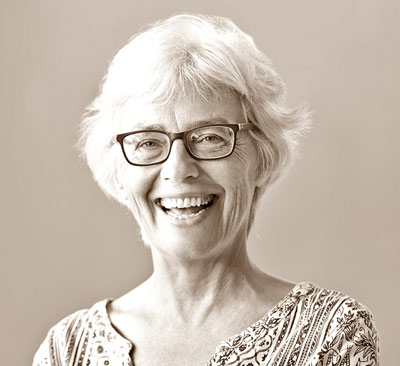
Dawn Garisch is an author and medical doctor. She is a founding member of the Life Righting Collective (liferighting.com), running writing courses. She has had seven novels, poetry, short stories, a nonfiction work, and a memoir published. She has had five plays and a short film produced, and has written for television. Dawn has won numerous awards for her published works.
References
Baldwin, J. (1984). The art of fiction LXXVIII. The Paris Review, 91, 48.
Bosnak, R. (2007). Embodiment: Creative imagination in medicine, art and travel. Taylor and Francis.
Changeux, J-P. (2004). The physiology of truth: Neuroscience and human knowledge (M. B. DeBevoise, Trans.). The Belknap Press of Harvard University Press. (Original work published in 2002).
Cozolino, L. J. (2010). The neuroscience of psychotherapy: Healing the social brain (2nd ed.). W.W. Norton & Co.
Didion, J. (1976, December 5). Why I write. New York Times.
Garisch, D. (2012). Eloquent body. Modjaji Books.
Garisch, D. (2013). Dance with suitcase. Tiber Tree Press.
Garisch, D. (2017). Accident. Modjaji Books.
Garisch, D. (2018). To get to the moon [Unpublished play].
Garisch, D. (2024) Breaking milk. Heloise Press.
Garisch, D., Giddy, J., Griffin, G., & Reid, S. (2024). Can 'life writing' be therapeutic in response to trauma? An exploratory research project in Medical Humanities in South Africa. Medical Humanities, 50(1), 162–169. https://doi.org/10.1136/medhum-2021-012368
Gendlin, E. T. (1996). Focusing-oriented psychotherapy: A manual of the experiential method. Guilford Press.
Hollis, J. (1993). The middle passage: From misery to meaning in midlife. Inner City Books.
Hollis, J. (2000). The archetypal imagination. Texas A&M University Press.
Hugo, R. (2010). The triggering town: Lectures and essays on poetry and writing. W.W. Norton & Co.
Kandel, E. R. (2012). The age of insight: The quest to understand the unconscious in art, mind, and brain, from Vienna 1900 to the present. Random House.
Mindell, A. (1982). Dreambody: The body's role in revealing the self. Sigo Press.
Panksepp, J., & Biven, L. (2012). The archaeology of mind: Neuroevolutionary origins of human emotions. W. W. Norton & Company.
Poets.org. (2024, March 20). 2024 Blaney Lecture with Jane Hirshfield [Video]. https://youtu.be/s7ER2jmxt7E?si=hlNLkx928yfqBO17
Ruini, C., Mortara, C. C. (2022). Writing technique across psychotherapies—From traditional expressive writing to new positive psychology interventions: A narrative review. Journal Of Contemporary Psychotherapy, 52, 23–34. https://doi.org/10.1007/s10879-021-09520-9
Volume 5, No. 1 | March 2026